Telemetry2U logo
  • IoT Platform Features
    Real-Time Dashboards Data Visualisation Data Tables & Reports Alerts & Notifications Device Command & Control Device Automation Device Management Device Calibration Management Pre-Configured Hardware API Integration User Management Audit Reports CFR 21 Part 11 Controls IoT Server Infrastructure White-Labeling Services
  • IoT Devices
  • IoT Applications
  • Pricing
    Subscription Price Calculator Premium Pricing White Label Pricing
  • Contact us
  • About Us Quick Start Guide Help Contents Technical Bulletins LoRaWAN Technical Overview 21 CFR Compliance Example SOP Data Security Policy Privacy Policy Terms of Service Marketing Material Change Log Sitemap
  • Shop
  • Register
  • Login

Telemetry2U Account and Security Settings

Update your profile and notification contacts, manage app notifications and subscriptions, secure your login, create an API key, and control your personal account data.

Help Contents

  • 1.1Registering an Account
  • 1.2Logging In
  • 1.3Logging in as Guest
  • 2.1Viewing Dashboards
  • 2.2Building Dashboards
  • 2.3Dashboard Widgets
  • 2.4Copy a Dashboard
  • 2.5Sharing a Dashboard
  • 3.1Customising Charts
  • 4.1Reports
  • 4.2Report Icons and Colours
  • 4.3Adding and Editing Annotations
  • 4.5Period Statistics
  • 5.1Creating and Editing Audit Reports
  • 5.2Downloading Audit Reports
  • 5.3Scheduling Audit Reports
  • 5.4Digitally Signing an Audit Report
  • 6.1Main Admin Page
  • 6.2Company Admin
    • 6.2.1User Maintenance
    • 6.2.2Creating or Editing a User
    • 6.2.3Configure User Access
    • 6.2.4Notification Groups
    • 6.2.5Notification Group Members
  • 6.3Alert Admin
    • 6.3.1Creating and Editing Alerts
  • 6.4Node Admin
    • 6.4.1Creating and Editing Nodes
    • 6.4.2Renaming, Hiding & Sorting Sensor Inputs
    • 6.4.3Sending Downlink Commands
    • 6.4.4Creating Custom Payload Decoders
    • 6.4.5Creating Custom Downlink Commands
  • 6.5Gateway Admin
    • 6.5.1Creating and Editing Gateways
    • 6.5.2Gateway Status
  • 6.6Calibrations
    • 6.6.1Entering and Editing Calibrations
    • 6.6.2Uploading Calibration Certificates
    • 6.6.3Downloading Calibration Certificates
  • 6.7Actions and Automation
    • 6.7.1Creating/Editing Actions
    • 6.7.2Scheduling Actions
    • 6.7.3Automating Actions
  • 6.8Network Integrations
    • 6.8.1Integrating to the Helium Network
    • 6.8.2Integrating to The Things Industries
  • 6.9System Administration
    • 6.9.1Add/Edit System Notices
  • 7.1Modifying Personal Data and Settings
  • 7.2Enabling App Notifications
  • 7.3Starting a Free Trial
  • 7.4Upgrading to a Paid Subscription
  • 7.5Changing Login Email Address
  • 7.6Changing Login Password
  • 7.7Creating an API Key
  • 7.8Two-Factor Authorisation (2FA)
  • 7.9Delete Personal Data and Close Account

7.1 - Modifying Personal Data and Settings

The Profile page is available to every user and controls the personal, regional, contact, and map settings associated with the account.

Open the Account menu from the top navigation, then select Profile. Review the fields below and select Save after making changes.
Who can make changes?

Users can update their own profile. A company administrator may also be able to update these details through user maintenance, depending on their assigned permissions.

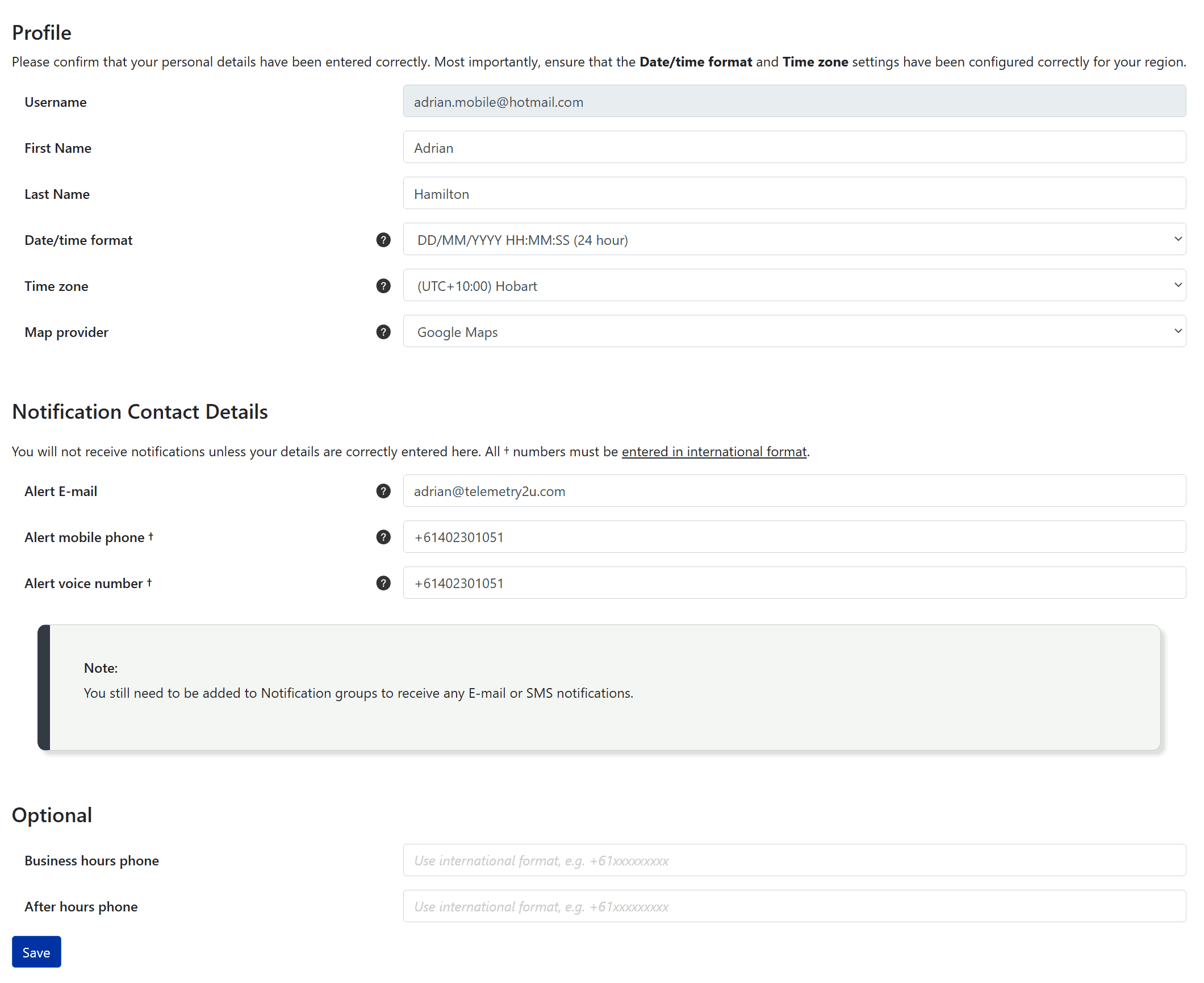
Profile page showing personal details, date and time settings, notification contacts, and map provider
Use the Profile page to maintain the settings applied to your user account.

Profile Fields

Username

The email address used to register and sign in. It cannot be changed on the Profile page; use the Email page described in Section 7.5.

First Name and Last Name

The names entered during registration. Both fields are mandatory and can be updated by the user or an authorised company administrator.

Date/Time Format

Controls how timestamps are displayed throughout the platform, including on charts, reports, and audit reports.

Time Zone

Controls the time zone used for timestamps throughout the platform, including on charts, reports, and audit reports.

Alert Email

The address used for email notifications, including alerts and scheduled audit reports. This field is optional, but email notifications cannot be delivered when it is blank.

Alert Mobile Phone

The number used for SMS notifications. Enter it in international format, such as +61.... This field is optional, but SMS alerts cannot be delivered when it is blank.

Alert Voice Number

The number used for voice notifications. Enter it in international format, such as +61.... This field is optional, but voice alerts cannot be delivered when it is blank.

Map Provider

Selects the map service used for compatible GPS devices. Available options may include OpenStreetMap, Google Maps, and Bing Maps.

Business Hours Phone

Your optional contact number for normal business hours.

After Hours Phone

Your optional contact number for use outside normal business hours.

7.2 - Enabling App Notifications
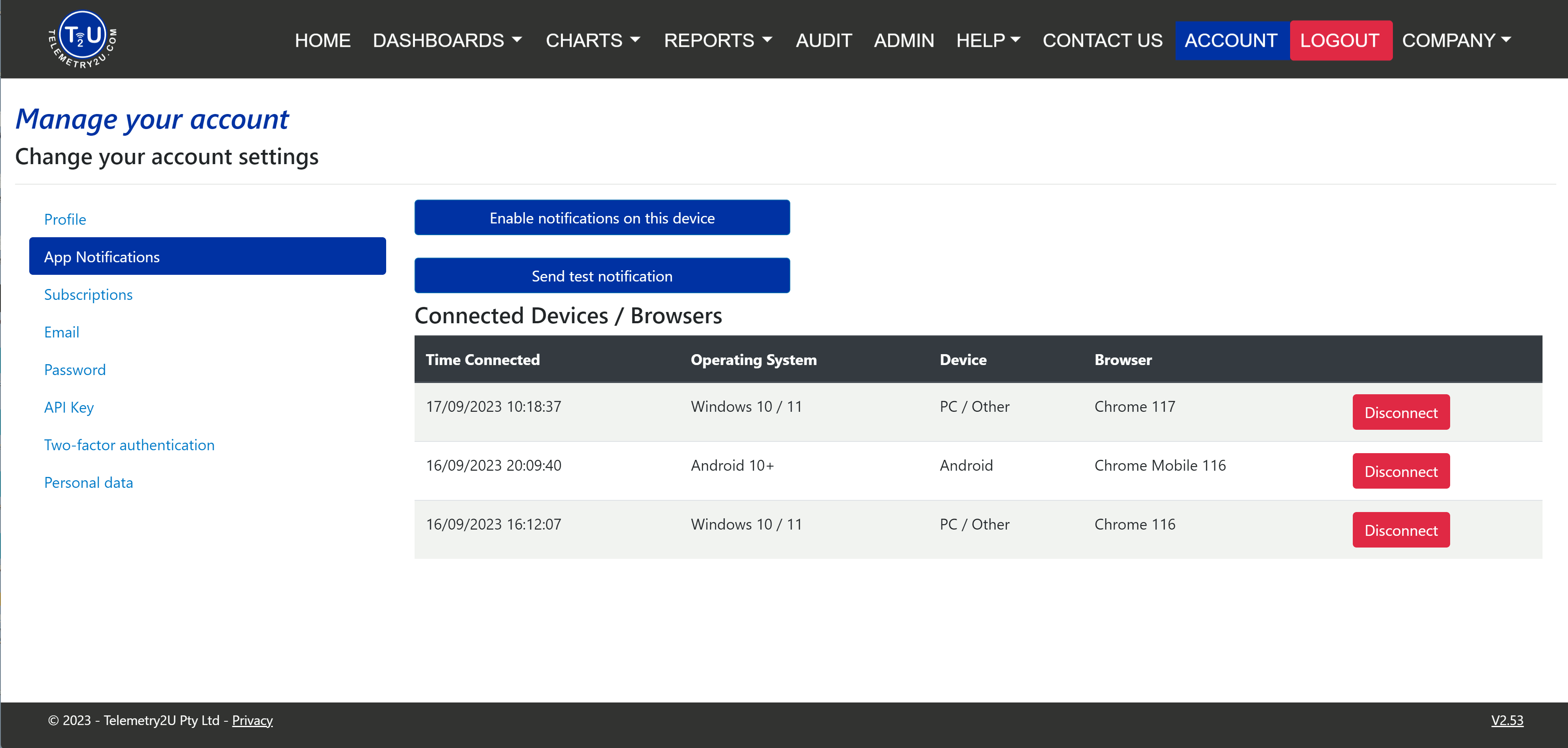
App Notifications page showing the enable notifications button, registered devices, and test notification control
Register the current browser or installed app to receive push notifications.

Push notifications can be delivered to supported browsers and devices and linked to alert conditions or node and gateway communication alerts.

  1. Install the platform app or open the platform in a supported browser on the device that should receive notifications.
  2. Open Account, select App Notifications, and then select Enable notifications on this device.
  3. Allow notifications when the operating system or browser displays a permission request.
  4. Confirm that the device or browser appears in the registered-device table at the bottom of the page.
  5. Select Send test notification to send a test message to all devices currently registered to your account.
Notification requirements

Keep the operating system and browser up to date. Clearing browser data may remove the notification registration, requiring the device to be enabled again.

Registering a device does not automatically add app notifications to every alert. An administrator must also enable App Notifications in the relevant notification group .

7.3 - Starting a Free Trial

A free trial can be used to create an independent account and evaluate the platform with your own compatible hardware.

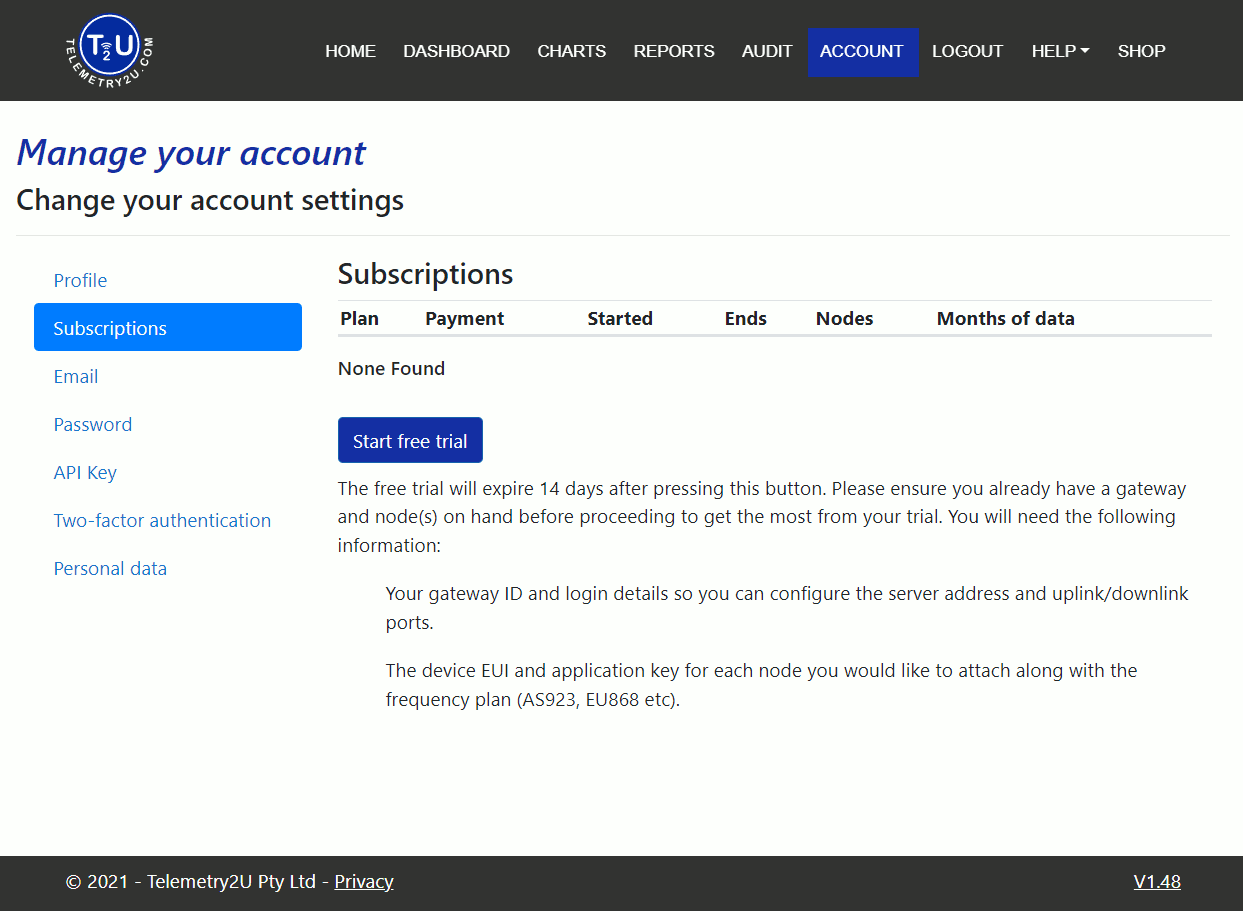
Open Account, select Subscriptions, and then select Start Free Trial. Review the trial details and select Save to create the individual account.

The trial runs for 14 days and supports one user, one gateway, and two nodes. SMS and voice alerts are not available during the trial, but the remaining trial functions can be used to assess whether the platform meets your monitoring requirements.

You can upgrade to a paid subscription at any time during the trial. If no paid plan is selected, the account and its data are scheduled for deletion one month after the trial expires.
Before the trial expires

Export any information that must be retained and choose a paid plan before the post-trial deletion period ends.

Subscriptions page showing the Start Free Trial option
Start a trial from the Subscriptions page.

7.4 - Upgrading to a Paid Subscription
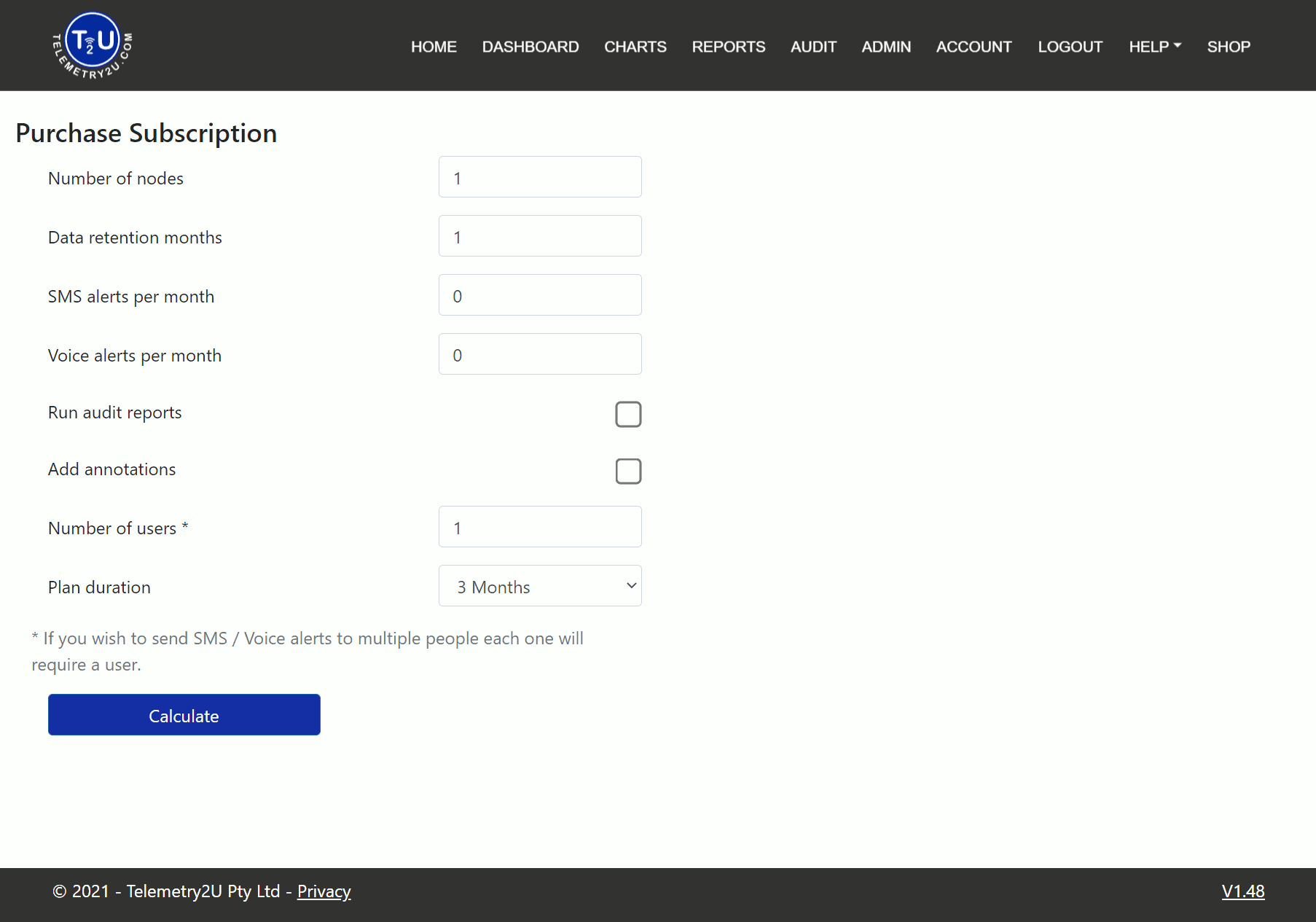
Plan Subscription page showing subscription configuration and pricing controls
Configure the required plan and review the calculated subscription charge.

A paid subscription is required to continue using an independent account after the 14-day trial.

  1. Open Account and select Subscriptions.
  2. Select Plan Subscription.
  3. Complete the form with the required users, gateways, nodes, and optional features.
  4. Select Calculate to generate the subscription price.
  5. Review and accept the charges, then complete payment using an available card or PayPal option.

Billing can be selected monthly, quarterly, or annually. Large deployments may be eligible for a customised plan; contact the service provider when planning a project of at least 50 nodes.

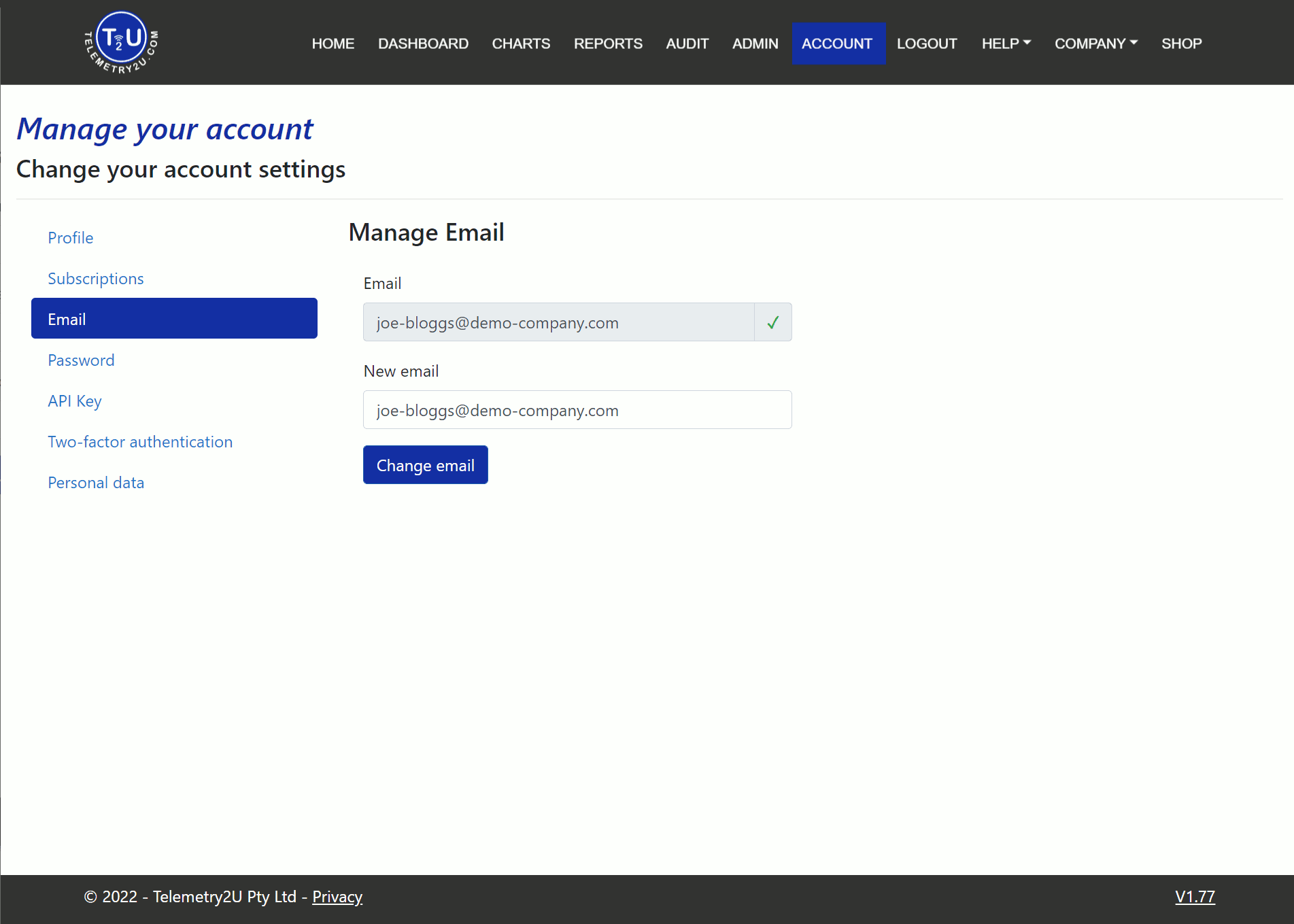
7.5 - Changing the Login Email Address

The Email page changes the email address used as the account username.

  1. Open Account and select Email.
  2. Enter the replacement address in the New Email field.
  3. Select Change Email.
  4. Open the confirmation message sent to the new address and select its confirmation link.
  5. After confirmation, sign in using the new email address.
Confirmation is required

The login email does not change until the confirmation link has been opened. Until then, the original email address remains valid for signing in.

Email settings page showing the current email and New Email field
Enter the new address and complete the confirmation sent to that address.

7.6 - Changing the Login Password
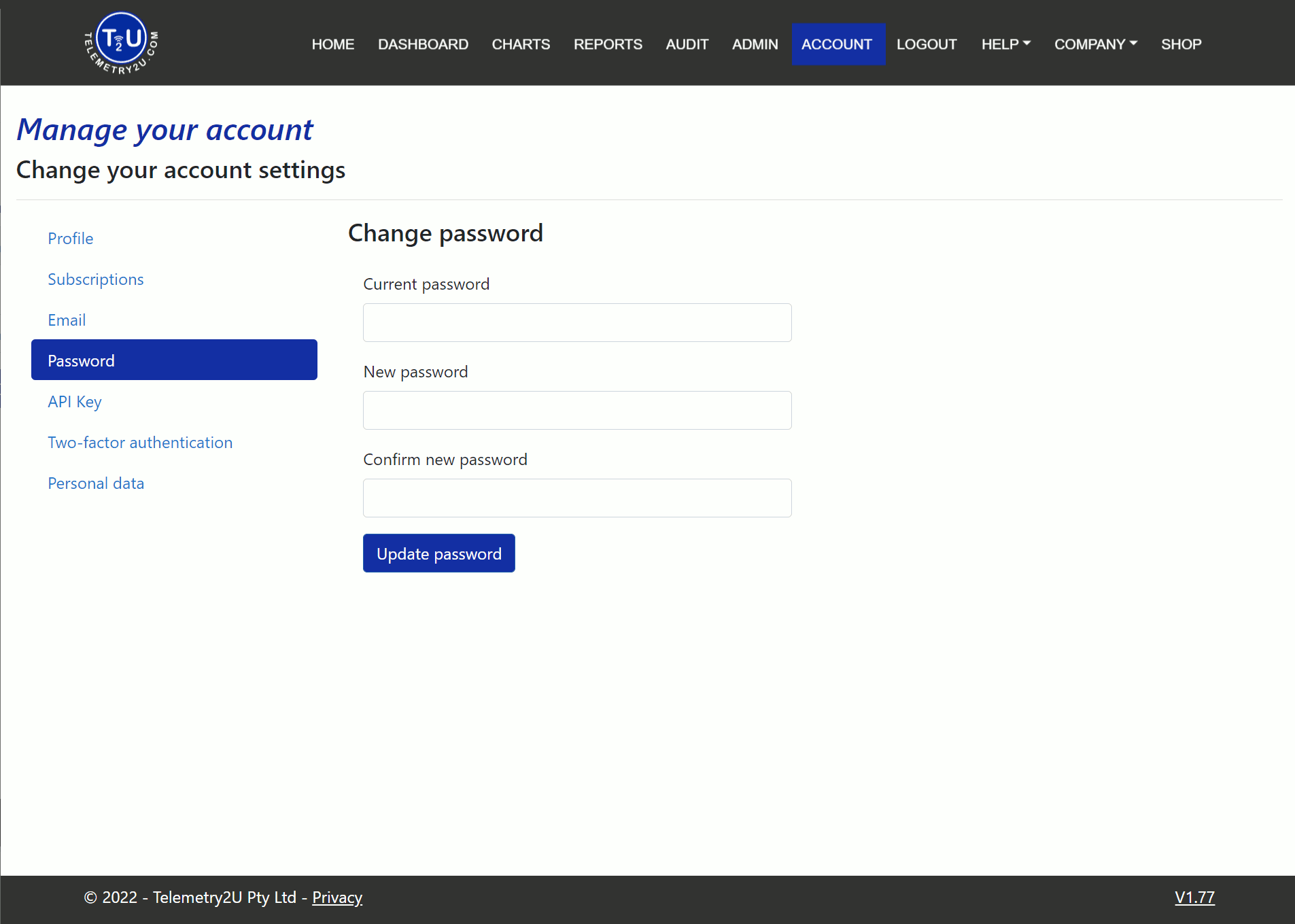
Password page showing Current Password, New Password, Confirm New Password, and Update Password controls
Enter the current password before setting and confirming the replacement password.

Use the Password page to replace the password used to sign in.

  1. Enter the existing password in Current Password.
  2. Enter the replacement password in New Password.
  3. Enter the same password in Confirm New Password.
  4. Select Update Password.
Password requirements

The password must be at least six characters long and contain an uppercase letter, a lowercase letter, a number, and a non-alphanumeric character.

A confirmation message is sent to the account’s registered email address after the password has been changed successfully.

7.7 - Creating an API Key

An API key identifies authorised software when it requests account data through the platform’s application programming interface.

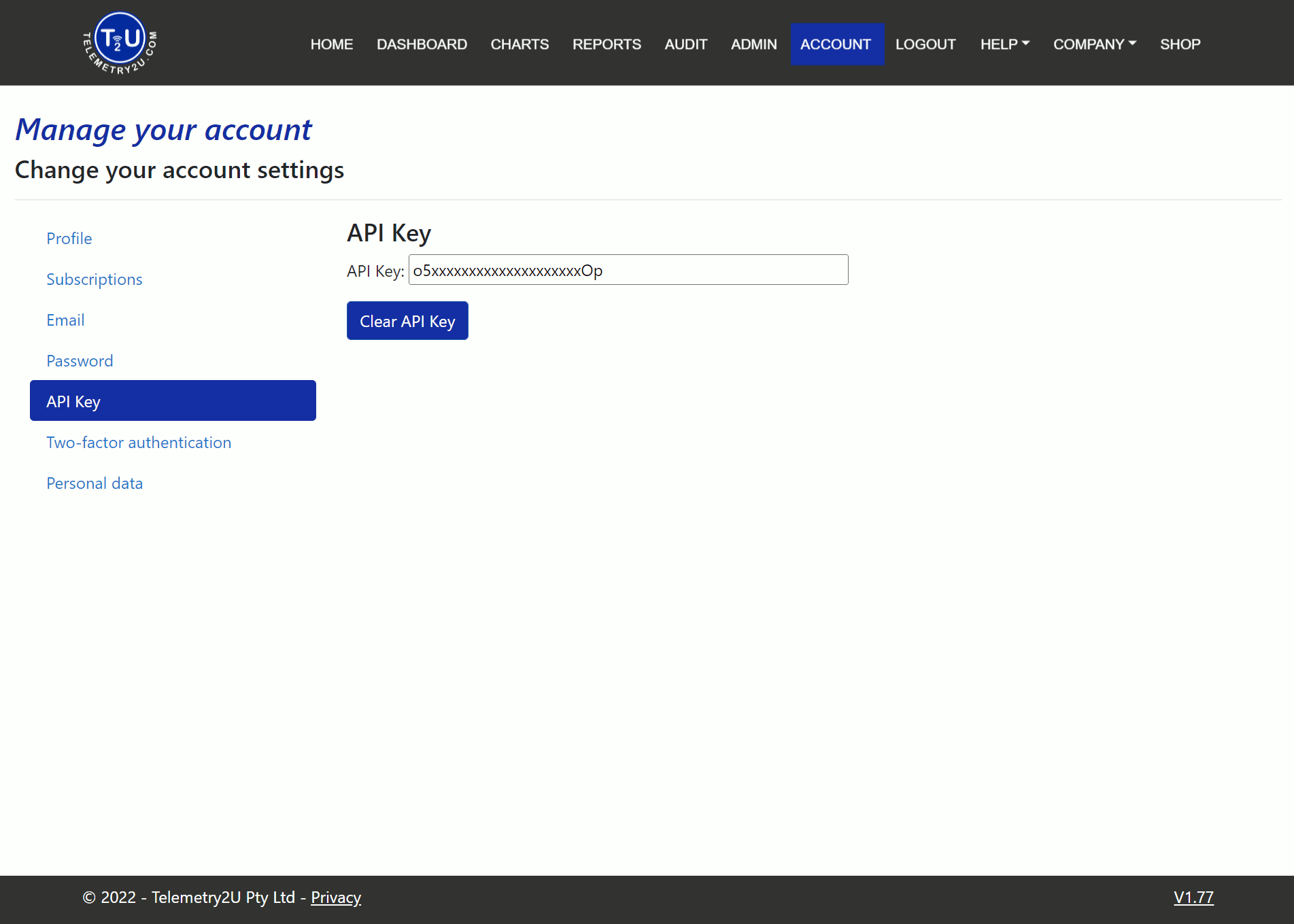
If no key exists, select Create API Key. The generated key is displayed in the API Key field and can then be entered into the authorised third-party application.

Select Clear API Key when the current key is no longer required or may have been exposed. To rotate the key, clear it first and then create a replacement.

For available endpoints, request details, response examples, and sample integrations, refer to the public API documentation and sample code (opens in a new tab) .
Protect the API key

Treat the key as a password. Do not publish it, include it in public source code, or share it with anyone who should not have access to the account’s API data.

API Key page showing the API Key field and create or clear controls
Create, clear, or rotate the key used by authorised API integrations.

7.8 - Two-Factor Authentication (2FA)
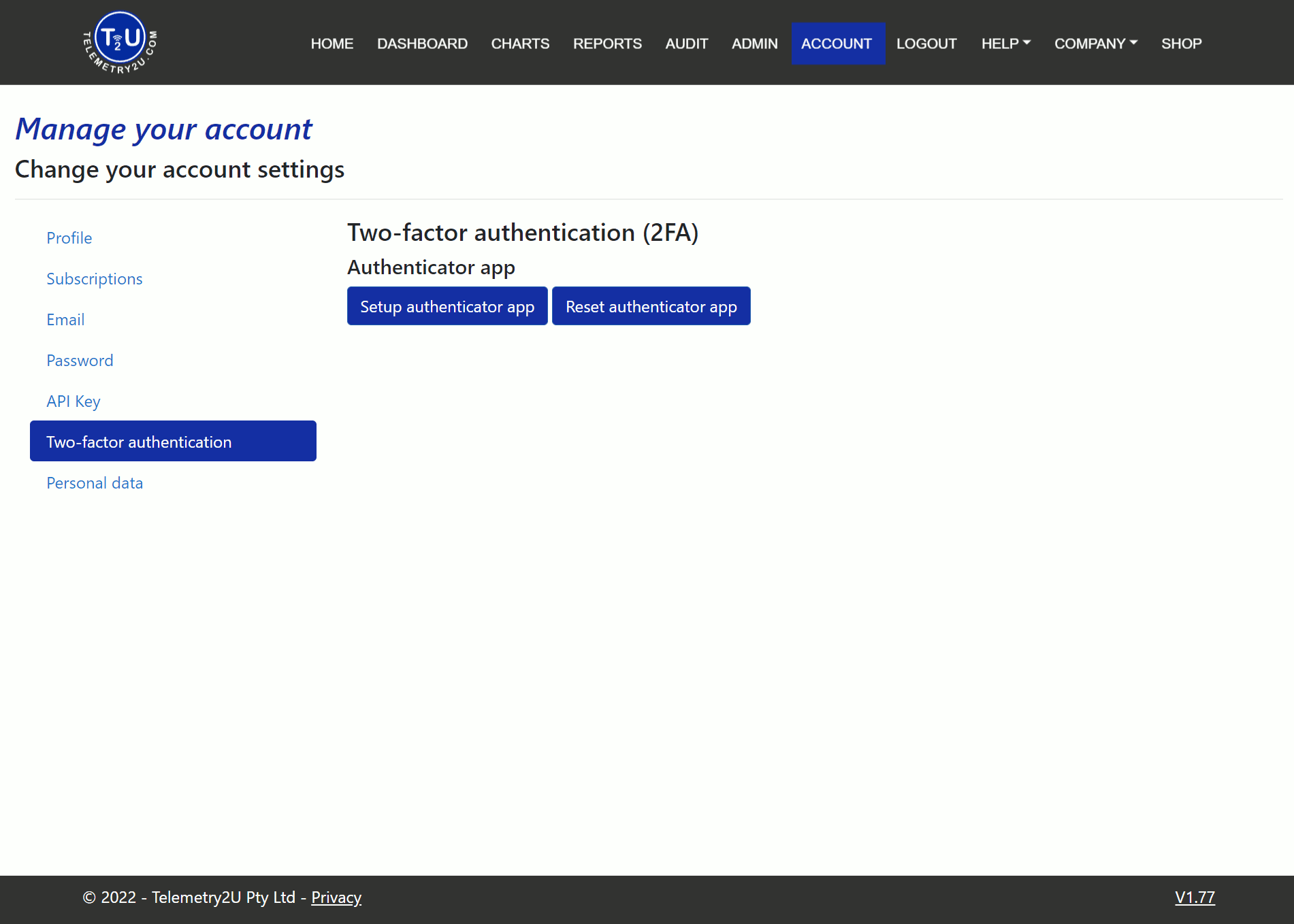
Two-factor authentication page showing a QR code, setup key, verification code field, and Verify button
Connect a compatible authenticator app and verify the current one-time code.

Two-factor authentication adds a time-based verification code to the normal email and password sign-in process.

  1. Install a compatible authenticator app on a trusted phone or computer.
  2. Open the platform’s two-factor authentication setup page.
  3. Scan the QR code with the authenticator app. If scanning is unavailable, enter the setup key displayed on your own page. Spaces and letter casing do not affect the key.
  4. Enter the current code generated by the authenticator app in Verification Code.
  5. Select Verify to complete the setup.
Resetting the authenticator

If 2FA has already been configured and must be replaced, select Reset Authenticator App and complete the setup again using the newly displayed QR code or key.

7.9 - Downloading Personal Data or Closing the Account

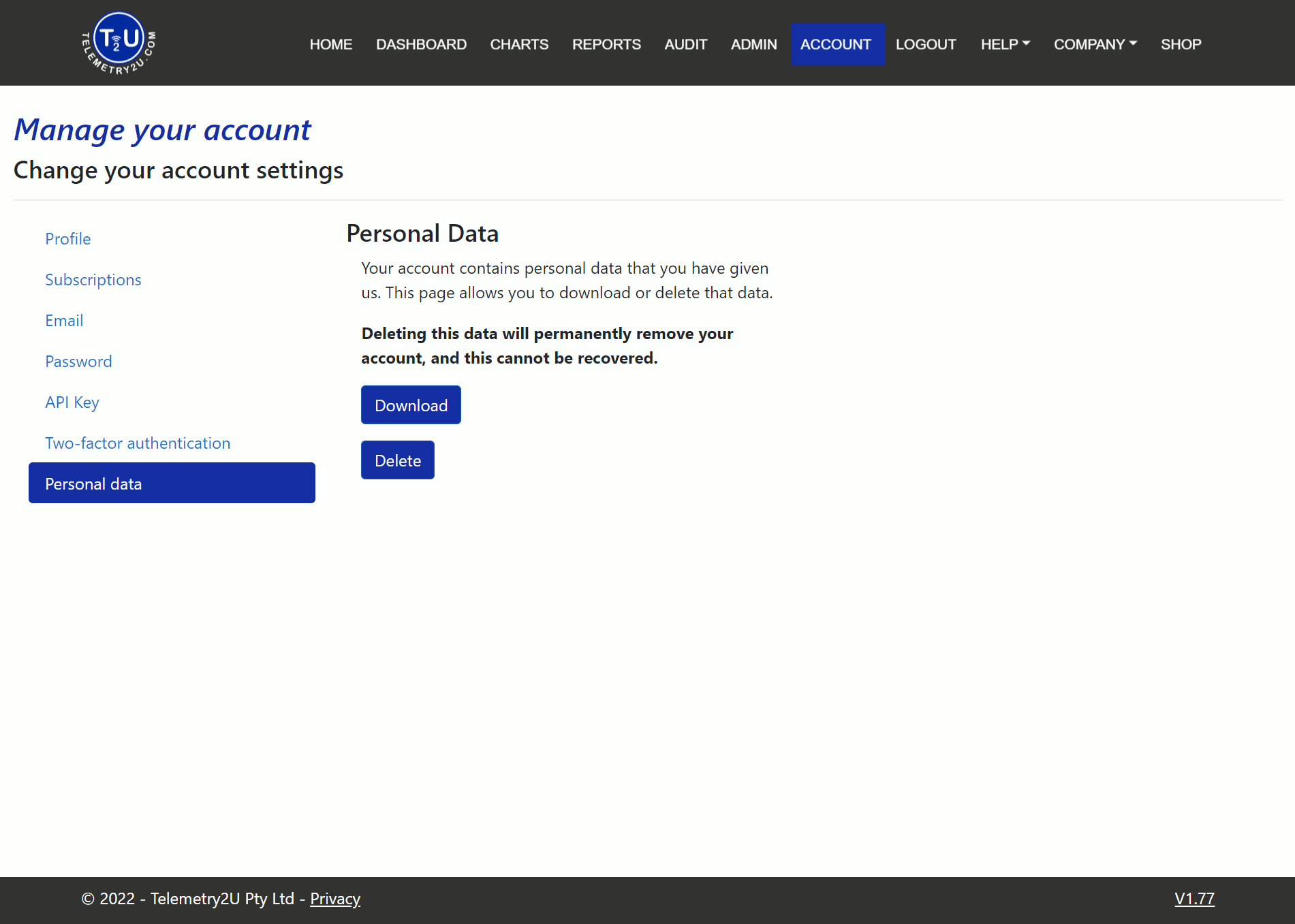
The Personal Data page provides controls to download the personal account information available to the user or permanently delete the account.

Open Account, select Personal Data, and then select Download to obtain the available personal data in JSON format. The file can be opened in a text editor or another application that supports JSON.

To close the account and remove its personal data, select Delete and complete the confirmation process shown by the platform.
Account deletion is permanent

Deleted personal data cannot be recovered, and the account can no longer be used to sign in. To use the service again later, you will need to register a new account.

Personal Data page showing Download and Delete account data controls
Download the available personal data before permanently deleting the account.

Continue Learning

Registration and First Login Create an account, confirm the email address, and complete the initial profile. Install the Platform App Add the web app to a supported device before enabling push notifications. Notification Groups Configure which users receive email, SMS, voice, and app notifications.

Access a Powerful IoT Platform
Free for 14 Days

Begin with a 14-day free trial before choosing from one of three 'all-inclusive' plans.

Purchase hardware from our online store and enjoy a 60-day free-trial

Start Free Trial View Pricing Plans
Visual representation of IoT connectivity and data monitoring with Telemetry2U

Contact Us

  • Local phone icon Telemetry2U Sales phone number
  • International phone icon Telemetry2U international phone number
  • Sales email icon Telemetry2U Sales Email address
  • Support email icon Telemetry2U Support Email address
  • Accounts email icon Telemetry2U Accounts Email address

Shop At Our Store

Click to browse the Telemetry2U store

Visit our store for Dragino devices
Ready to use with Telemetry2U

Follow Us Online

  • Facebook icon
  • Twitter icon
  • YouTube icon
  • Instagram icon
Telemetry2U Logo with Slogan
© 2025 - Telemetry2U Pty Ltd - Privacy V3.27