LoRaWAN vs NB-IoT vs LTE-M for IoT Monitoring

LoRaWAN, LTE-M and NB-IoT can all connect low-power sensors over long distances, but they use different infrastructure and suit different deployment conditions. The right choice depends on device location, mobility, reporting frequency, power supply, coverage and project scale.

Choose the Network Around the Application—not the Other Way Around

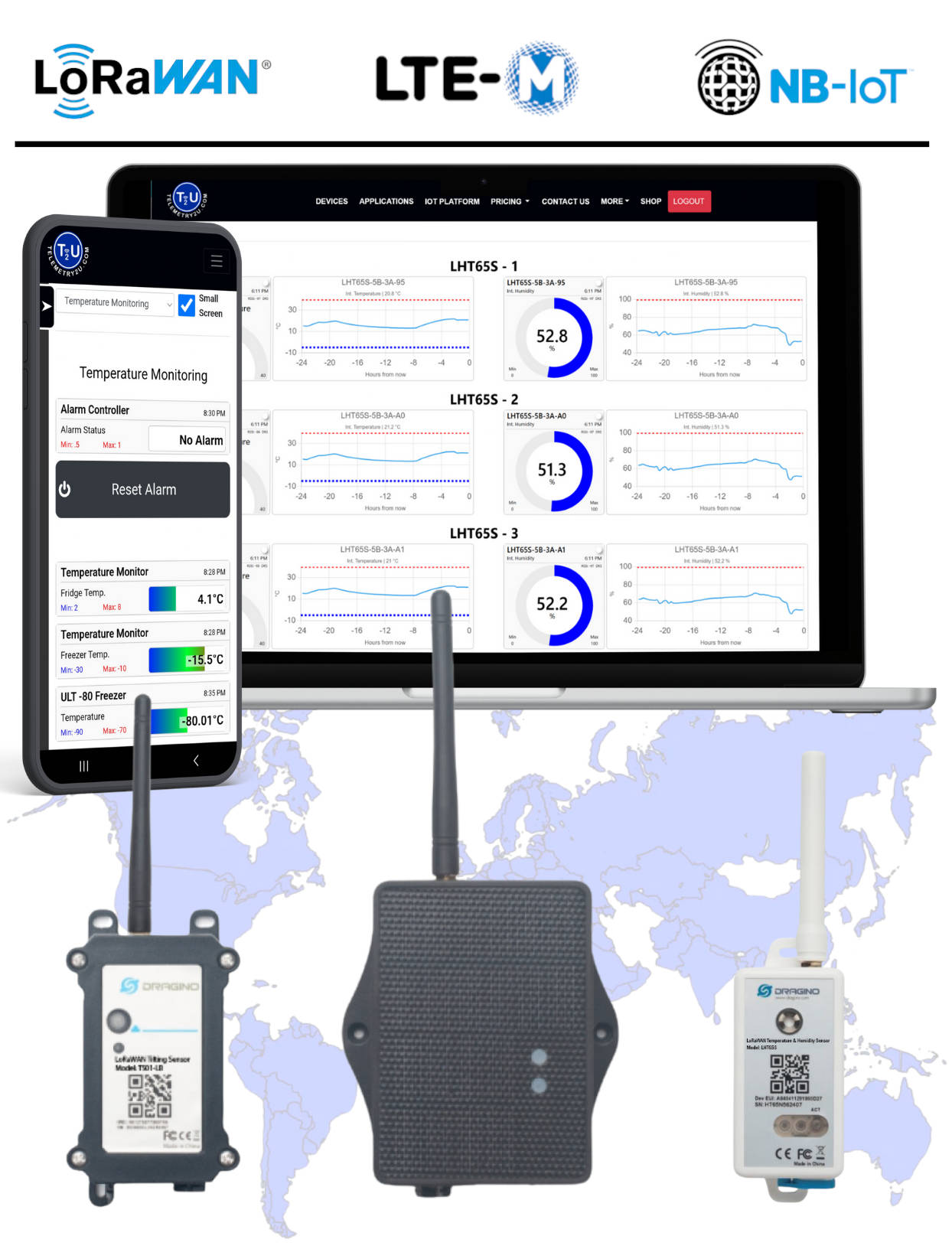
Telemetry2U can bring compatible devices from all three network types into the same dashboards, alerts and historical records. A project can also use more than one network when different sites or assets have different requirements.

LoRaWAN, LTE-M and NB-IoT devices connected to the Telemetry2U monitoring platform

How the Three IoT Networks Operate

LoRaWAN, LTE-M and NB-IoT are all low-power wide-area network technologies, but they use different infrastructure and are optimised for different types of telemetry. Understanding those differences is more useful than selecting a network from range or device price alone.

LoRaWAN

Private or public gateway-based LPWAN

LoRaWAN uses regional unlicensed spectrum. End devices transmit through one or more gateways connected to a compatible network server, allowing an organisation to build private coverage or use a supported public LoRaWAN network.

  • Designed for small payloads and long battery life
  • Coverage can be expanded by adding or relocating gateways
  • No carrier SIM is required in each end device

Main trade-off: gateway placement, internet backhaul, regional duty-cycle limits and device class affect coverage and downlink performance.

LTE-M

Operator-managed mobile cellular LPWAN

LTE-M connects directly through a compatible SIM and mobile network. It provides stronger mobility support, lower latency and higher data capacity than NB-IoT, making it useful for moving assets and more responsive telemetry.

  • Supports cellular handover for mobile applications
  • Suitable for larger transfers and supported firmware updates
  • No local gateway infrastructure is required

Main trade-off: each device requires suitable carrier coverage and a data service, while weak signal conditions can increase power use.

NB-IoT

Operator-managed narrowband cellular LPWAN

NB-IoT connects directly through a compatible SIM and operator network. It is optimised for small, infrequent data transfers from fixed devices and includes coverage-enhancement modes for difficult indoor or remote locations.

  • Strong fit for fixed sensors and utility-style monitoring
  • Designed for small payloads and power-saving operation
  • No local gateway infrastructure is required

Main trade-off: latency is generally higher than LTE-M, mobility support is more limited and availability depends on the selected operator.

LoRaWAN, LTE-M and NB-IoT Comparison

Use this comparison as a starting point rather than a substitute for a site survey. Actual coverage, battery life, roaming, data plans and supported features depend on the selected hardware, network operator, antenna, installation and reporting profile.

Comparison of LoRaWAN, LTE-M and NB-IoT for IoT monitoring
Decision Factor LoRaWAN LTE-M NB-IoT
Infrastructure Private gateways or a supported public LoRaWAN network Operator-managed cellular network Operator-managed cellular network
Spectrum Regional unlicensed ISM spectrum, including AU915 and AS923 Licensed cellular spectrum Licensed cellular spectrum
Coverage Strategy Coverage is designed around gateway placement, terrain, buildings and backhaul Uses available operator coverage and supported device bands Uses operator coverage with coverage-enhancement features for difficult locations
Power Profile Very low for small, infrequent transmissions Low power, although consumption is often higher than LoRaWAN or NB-IoT and depends strongly on coverage and reporting Low power for small, infrequent transmissions using supported power-saving modes
Data Capacity Small payloads and low data rates Higher data rates and larger transfers than NB-IoT Small payloads and low data rates
Latency Application- and device-class dependent; not intended for continuous low-latency exchange Typically the lowest latency of these three options Usually higher and more variable than LTE-M
Mobility Mobile devices are supported, but performance depends on network coverage and application design Strong mobility and cellular handover support Primarily suited to stationary or intermittently moving devices
Downlink and Control Available, but timing and capacity depend on device class and regional limits Well suited to responsive downlink, remote commands and supported firmware updates Available, but less suitable for frequent or time-critical control
Ongoing Network Cost No carrier SIM per device; gateway, backhaul and network-server costs may apply Compatible SIM and data plan required; pricing depends on provider and usage Compatible SIM and data plan required; pricing depends on provider and usage
Typical Fit Buildings, farms, campuses and remote sites with multiple sensors Mobile assets, cold chain, dispersed equipment and more responsive telemetry Meters and fixed sensors in deep-indoor or difficult coverage locations

Each decision factor is grouped into a separate card for easier comparison on smaller screens.

Infrastructure

LoRaWAN
Private gateways or a supported public LoRaWAN network
LTE-M
Operator-managed cellular network
NB-IoT
Operator-managed cellular network

Spectrum

LoRaWAN
Regional unlicensed ISM spectrum, including AU915 and AS923
LTE-M
Licensed cellular spectrum
NB-IoT
Licensed cellular spectrum

Coverage Strategy

LoRaWAN
Coverage is designed around gateway placement, terrain, buildings and backhaul
LTE-M
Uses available operator coverage and supported device bands
NB-IoT
Uses operator coverage with coverage-enhancement features for difficult locations

Power Profile

LoRaWAN
Very low for small, infrequent transmissions
LTE-M
Low power, although consumption is often higher than LoRaWAN or NB-IoT and depends strongly on coverage and reporting
NB-IoT
Low power for small, infrequent transmissions using supported power-saving modes

Data Capacity

LoRaWAN
Small payloads and low data rates
LTE-M
Higher data rates and larger transfers than NB-IoT
NB-IoT
Small payloads and low data rates

Latency

LoRaWAN
Application- and device-class dependent; not intended for continuous low-latency exchange
LTE-M
Typically the lowest latency of these three options
NB-IoT
Usually higher and more variable than LTE-M

Mobility

LoRaWAN
Mobile devices are supported, but performance depends on network coverage and application design
LTE-M
Strong mobility and cellular handover support
NB-IoT
Primarily suited to stationary or intermittently moving devices
LoRaWAN
Available, but timing and capacity depend on device class and regional limits
LTE-M
Well suited to responsive downlink, remote commands and supported firmware updates
NB-IoT
Available, but less suitable for frequent or time-critical control

Ongoing Network Cost

LoRaWAN
No carrier SIM per device; gateway, backhaul and network-server costs may apply
LTE-M
Compatible SIM and data plan required; pricing depends on provider and usage
NB-IoT
Compatible SIM and data plan required; pricing depends on provider and usage

Typical Fit

LoRaWAN
Buildings, farms, campuses and remote sites with multiple sensors
LTE-M
Mobile assets, cold chain, dispersed equipment and more responsive telemetry
NB-IoT
Meters and fixed sensors in deep-indoor or difficult coverage locations

Coverage must be confirmed at the installation location. A technology may be technically suitable but unavailable through the required carrier, public network or gateway placement. Test with the intended device, antenna and installation enclosure before committing to a large deployment.

Match the Network to the Deployment

Start with the location and operational requirements. Device cost alone rarely determines the best result once gateways, SIM plans, installation access, maintenance visits and expected battery life are considered.

LoRaWAN

Local Sensor
Networks

Choose LoRaWAN when:

  • Many sensors are installed around the same building, farm or site
  • You can install a gateway with reliable internet backhaul
  • Small payloads and long battery life are more important than low latency
  • You want control over private network coverage and infrastructure
LTE-M

Mobile and
Dispersed Assets

Choose LTE-M when:

  • The device moves between locations or cellular coverage areas
  • Assets are widely dispersed and a local gateway is impractical
  • More responsive telemetry, larger transfers or remote updates are required
  • The available power budget can support cellular connection activity
NB-IoT

Fixed Sensors in
Difficult Coverage

Choose NB-IoT when:

  • The sensor is fixed and sends small amounts of data infrequently
  • Coverage enhancement or deep-indoor penetration is a major requirement
  • A direct operator connection is preferred over installing a gateway
  • Higher latency is acceptable for the monitoring application
Solar-powered interface options for LoRaWAN, LTE-M and NB-IoT devices

Power Supply and Network Choice Are Separate Decisions

Battery and solar-powered hardware is available across LoRaWAN, LTE-M and NB-IoT product ranges. Solar charging can reduce maintenance at remote sites, but the panel, battery and enclosure must be sized for the device load, reporting interval, climate and expected cellular or gateway connection time.

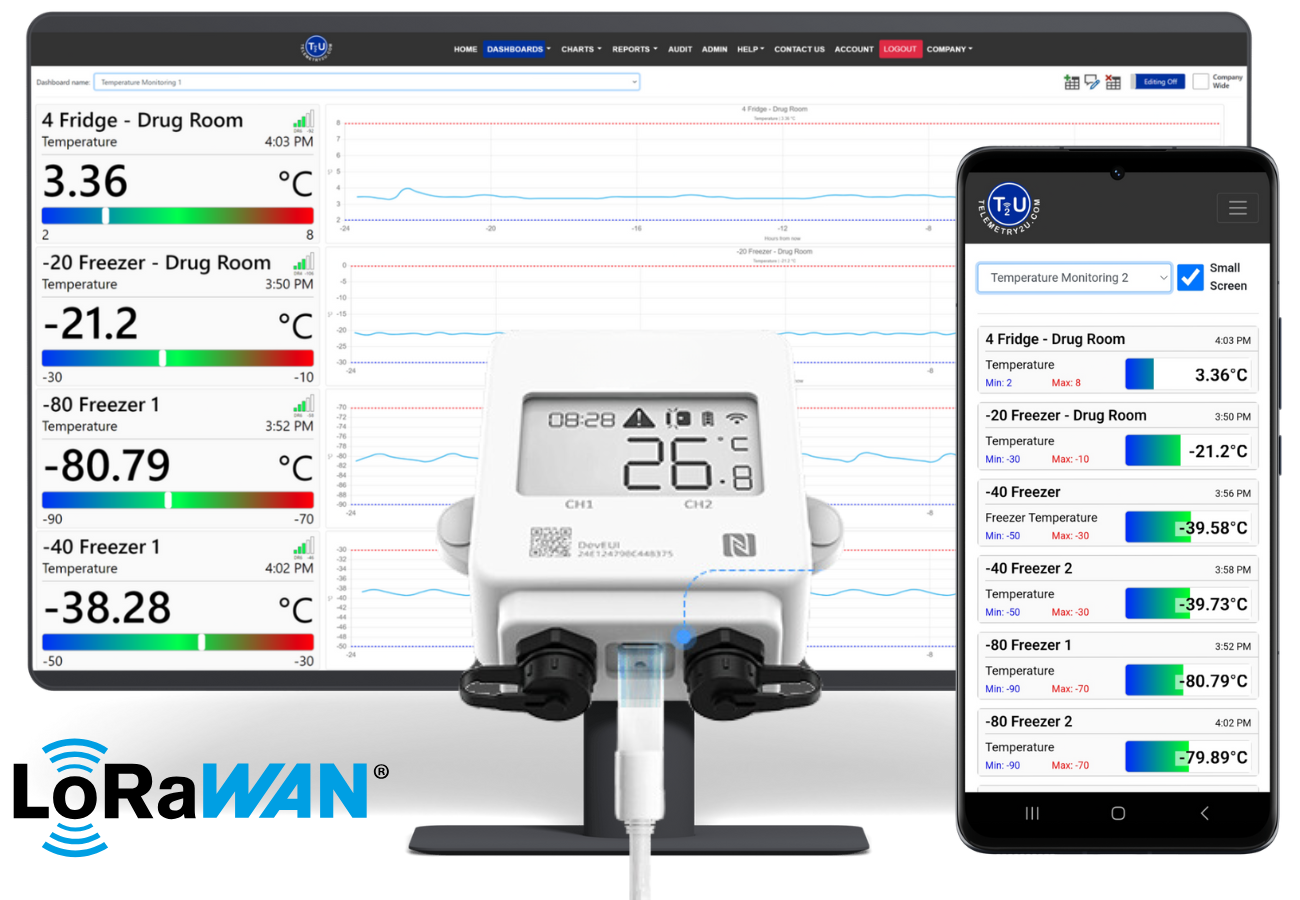
Telemetry2U dashboards displayed on desktop and mobile devices

Use Different Networks in One Telemetry2U Account

Telemetry2U separates the monitoring platform from the network decision. Compatible LoRaWAN, LTE-M and NB-IoT devices can appear together in the same account, allowing each location or asset to use the most practical connection method.

  • Common dashboards, charts, reports and data exports
  • Email, SMS and voice alerts across supported devices
  • Device groups, user permissions and multi-site organisation
  • Remote commands and automation where the device and network support them

Final compatibility depends on the device payload, protocol, regional band, carrier or LoRaWAN network, power supply and required downlink behaviour.

Related Network Setup Guides

After selecting a network, use the relevant setup guide to connect compatible devices to Telemetry2U. Device menus, commands and carrier settings vary by model.

LoRaWAN via Helium

Telemetry2U LoRaWAN integration through the Helium Network

Register a LoRaWAN device, configure the regional frequency plan and route its data from the Helium Network to Telemetry2U.

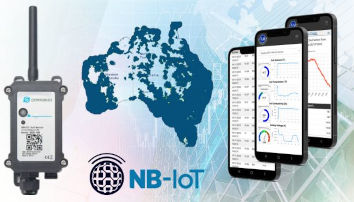
NB-IoT Device Setup

Adding compatible Dragino NB-IoT sensors to Telemetry2U

Review the platform and carrier settings used to add compatible Dragino NB-IoT devices to Telemetry2U.