Real-Time Aquaculture Water Quality Monitoring
Connect professional water quality sensors to Telemetry2U using LoRaWAN, NB-IoT or LTE-M. Monitor dissolved oxygen, temperature, pH, conductivity, salinity, turbidity and other supported measurements from compatible RS-485, Modbus RTU and SDI-12 instruments.
Connect Existing Sensors Without a Proprietary Telemetry Stack
Use compact battery or solar-powered interface nodes to bring proven aquaculture sensors online, then view live readings, trends, alerts and device status through one cloud platform.
Continuous Water Quality Monitoring for Aquaculture Operations
Manual sampling provides an important check, but it only captures conditions at one moment. Continuous remote monitoring shows how water quality changes between inspections, overnight and during weather, feeding, aeration or equipment events.
See Developing Water Quality Problems Before the Next Site Visit
Telemetry2U provides a central view of connected water quality sensors so farm managers, technicians and researchers can review current conditions, identify trends and investigate events without travelling to every pond, tank, raceway or cage location.
- Live water quality readings: View current measurements from any authorised internet-connected device.
- Historical trends: Examine changes before, during and after aeration, feeding, rainfall or equipment events.
- Threshold alerts: Notify selected users when a reading moves outside configured operating limits.
- Multi-parameter dashboards: Display dissolved oxygen, pH, temperature, conductivity and other sensor values together.
- Device health visibility: Review communication status, battery condition and the latest successful reading.
- Multi-site monitoring: Organise sensors across multiple ponds, tanks, farms, hatcheries and research sites.
- Reports and data access: Review structured tables, charts and exports for operational analysis.
The platform can support routine aquaculture monitoring and wider marine water quality monitoring from the same account when suitable sensors and connectivity are selected.
How Aquaculture Sensor Data Reaches the Cloud
The monitoring system separates the sensor, interface, wireless network and cloud platform into clear components. This makes it possible to retain a suitable field instrument while modernising how its data is collected, transmitted and used.
From Water Quality Measurement to Actionable Alert
Measure
A water quality sonde or digital sensor measures the selected parameters at configured intervals.
Connect
A compatible RS-485, Modbus RTU or SDI-12 interface polls the sensor and prepares its measurements for transmission.
Transmit
LoRaWAN, NB-IoT or LTE-M carries the readings from the site to the Telemetry2U platform.
Monitor
Dashboards, historical charts and alerts turn the raw readings into information that operators can use.
Connect RS-485, Modbus and SDI-12 Water Quality Sensors
Telemetry2U is not limited to one water quality sensor manufacturer. A compatible sensor can be assessed using its protocol documentation, measurement map, power requirements and reporting needs. The interface node, decoder and dashboard are then configured for the selected deployment.
RS-485 and Modbus RTU Sensor Integration
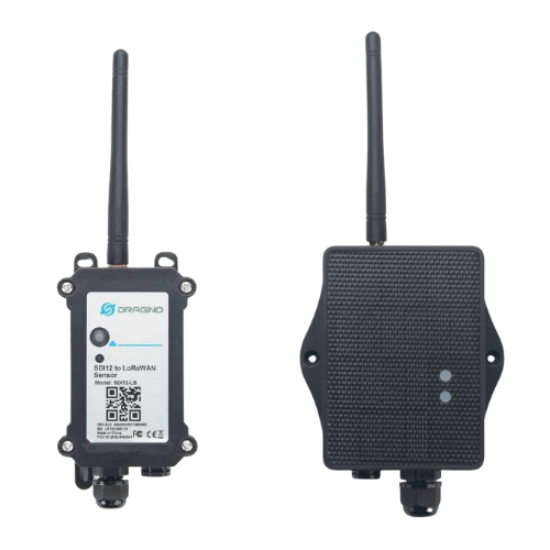
The Dragino RS485 Sensor Interface family provides a compact way to poll compatible water quality sensors and transmit their readings over LoRaWAN, NB-IoT or LTE-M. Battery-powered and solar-powered models are available, allowing the interface to be selected for the site and sensor.
- Connect documented RS-485 and Modbus RTU instruments
- Retain suitable existing sensors instead of replacing the complete measurement system
- Select LoRaWAN, NB-IoT or dual-mode LTE-M/NB-IoT hardware
- Use battery or solar-powered node variants where the sensor power budget allows
- Configure polling rules and payload decoding for the required measurements
- Support more than one RS-485 device where the protocol, addressing and power design permit
Current model options include RS485-LB and RS485-LS for LoRaWAN, RS485-NB and RS485-NS for NB-IoT, and RS485-CB and RS485-CS for dual-mode LTE-M/NB-IoT connectivity.
SDI-12 Sensors for Water and Environmental Monitoring
Compatible SDI-12 sensors can be connected through a dedicated Dragino SDI-12 Sensor Interface available in LoRaWAN, NB-IoT and LTE-M variants. This creates another practical path for digital instruments commonly used in water, hydrology and environmental monitoring.
- Support for compatible SDI-12 instruments with documented commands
- Battery and solar-powered interface options
- Private LoRaWAN or direct cellular network choices
- Structured decoding for the required measurement response
- Suitable for selected Aqualabo and other environmental sensor models
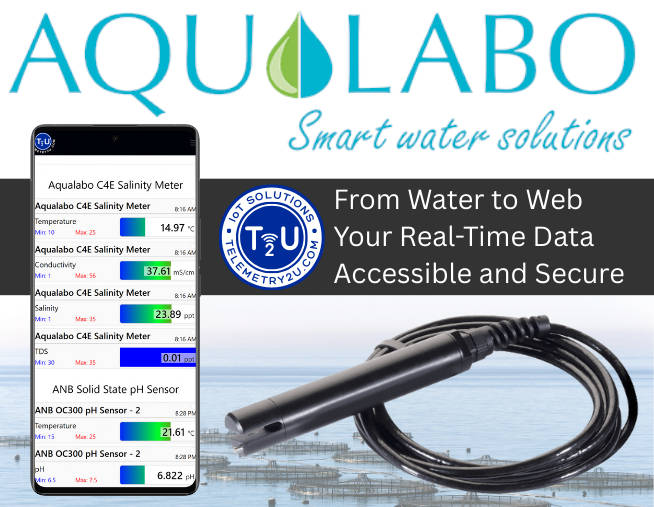
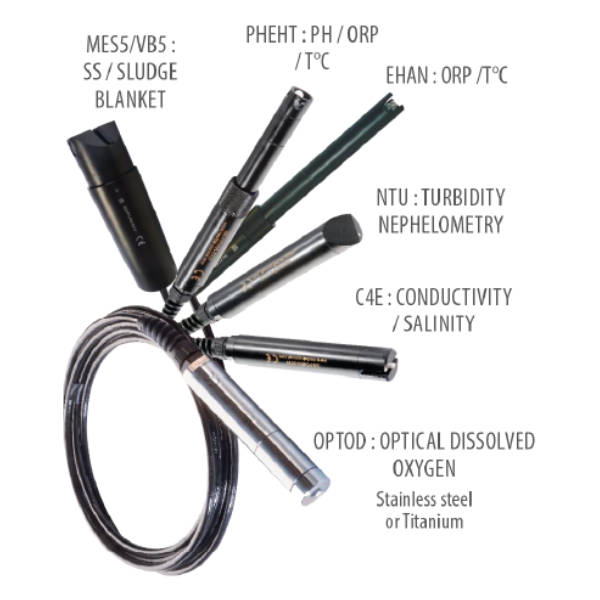
Aqualabo sensors provide a useful example because relevant models can offer Modbus RS-485 or SDI-12 output. Telemetry2U has integrated Aqualabo water quality sensors for real-time cloud data collection and alerting.
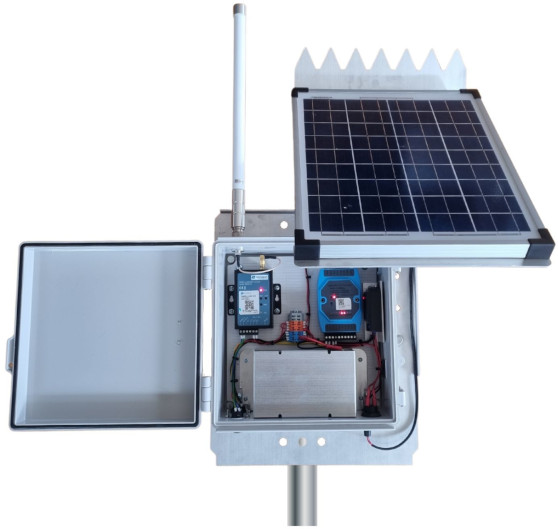
Battery and Solar Power for Remote Aquaculture Sites
Low-power instruments may be suitable for compact battery or integrated solar wireless nodes. Sensors requiring more continuous power, longer warm-up periods or additional equipment can use a higher-capacity solar interface kit.
- Battery-powered nodes: Practical where the sensor has a low duty cycle or its own suitable power source.
- Compact solar nodes: Rechargeable options for unattended outdoor deployments.
- High-capacity solar kits: Larger panels, battery storage and weatherproof enclosures for demanding sensors.
- Local DC supply: Suitable where reliable site power is already available.
- Power assessment: Sensor current, warm-up time, update interval, sunlight and communications must be considered together.
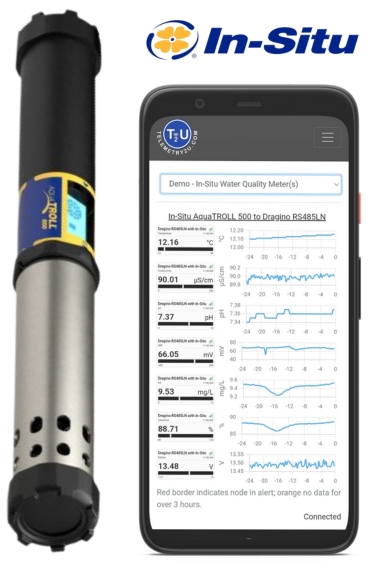
The In-Situ Aqua TROLL 600 is a current example of a low-power multiparameter sonde used for long-term water quality monitoring. Telemetry2U can assess its selected output and measurement configuration for connection to the most suitable interface node.
LoRaWAN, NB-IoT and LTE-M for Aquaculture Monitoring
The wireless network should be selected after considering sensor locations, coverage, update rate, power availability, gateway infrastructure and the number of monitoring points. Telemetry2U supports all three network types within the same platform.
NB-IoT for Fixed Remote Sensors
NB-IoT connects a sensor node directly to a compatible carrier network without requiring a local gateway. It can suit fixed, low-data-rate monitoring points where suitable coverage is available.
- Direct cellular connection using a SIM
- No local LoRaWAN gateway required
- Useful for distributed fixed monitoring locations
- Coverage must be confirmed at the installation point
LoRaWAN for Farms and Sensor Networks
LoRaWAN is well suited to aquaculture sites where one gateway can support many battery-powered sensors around ponds, tanks, hatcheries or nearby field locations.
- One gateway can support many compatible devices
- Long-range private network coverage
- Low ongoing network cost per sensor
- Gateway placement and radio coverage require planning
LTE-M for Direct Cellular Monitoring
LTE-M provides direct cellular connectivity and can suit distributed sites that need more frequent communication, lower latency or broader mobility support than a fixed NB-IoT deployment.
- Direct SIM-based connection without a gateway
- Higher data rate and lower latency than NB-IoT
- Useful for geographically dispersed assets
- Power consumption and carrier coverage must be assessed

One Platform Across Private and Cellular Networks
LoRaWAN, NB-IoT and LTE-M devices can be organised together in Telemetry2U. This allows a farm, research program or service provider to use different networks where needed without separating the resulting dashboards, alerts and historical data.
Water Quality Sensors and Measurements for Aquaculture
The exact measurement set depends on the connected sonde or sensor. Telemetry2U can display a focused group of core aquaculture parameters or a broader environmental dataset from a multiparameter instrument.
Compatible Sensor Families
Existing deployments demonstrate how manufacturer hardware can be connected through standard digital interfaces.
In-Situ Aqua TROLL Sondes
Aqua TROLL 500 and Aqua TROLL 600 multiparameter sondes can provide dissolved oxygen, pH, conductivity, turbidity, temperature and other configured measurements.
Aqualabo Digital Sensors
Individual dissolved oxygen, pH/ORP, conductivity, salinity, turbidity and suspended-solids sensors can be integrated through supported digital outputs.
Other RS-485 and SDI-12 Instruments
Sensors from other manufacturers can be assessed when protocol documentation, command details and power requirements are available.
Specialist Marine Instruments
Telemetry2U also supports selected oceanographic, pH, pressure and environmental sensor integrations for wider marine and research applications.
Core Water Quality Parameters
Configure dashboards around the measurements that matter to the species, production system and operational process.
Dissolved Oxygen
Monitor oxygen concentration and, where supplied by the sensor, percentage saturation and related temperature values.
Temperature, pH and ORP
Track thermal changes, acidity or alkalinity and oxidation-reduction conditions that influence aquatic health and process performance.
Conductivity, Salinity and Turbidity
Review dissolved-ion conditions, salt concentration and suspended-particle changes across fresh, brackish or marine systems.
Nutrients, Algae and Specialist Measurements
Compatible instruments may also provide ammonium, ammonia, nitrate, chlorophyll, blue-green algae, pressure, water level and other environmental measurements.
Established Water Quality and Marine Instrumentation
Telemetry2U has integrated or worked with equipment from established water quality and marine instrumentation suppliers. Compatibility depends on the available communications protocol, power requirements and published technical documentation.
Water Quality and Marine Sensor Suppliers
Explore instrumentation for aquaculture, water-quality and oceanographic monitoring applications.





Working with Imbros
Telemetry2U works directly with Imbros, a specialist supplier of marine and laboratory science instrumentation. Together, we help customers select suitable sensors and connect compatible equipment to cloud dashboards, alerts and historical reporting.
See the Aquaculture Water Quality Monitoring Dashboard
One Dashboard for Live Conditions and Historical Trends
View current water quality measurements, historical charts and device status from one central dashboard. The display can be configured around the sensor inputs and operating limits used by the deployment.
From Live Readings to Practical Operational Records
Operators can review current conditions, compare changing parameters and investigate when a measurement moved outside its expected range. The same platform can also support alerts, reports and user access across multiple sites.
- View dissolved oxygen, temperature, pH, conductivity and other connected measurements.
- Examine historical trends around feeding, aeration, rainfall and equipment events.
- Identify threshold breaches and review associated alert activity.
- Check device communication, signal quality, battery condition and latest update time.
- Organise many sensors, ponds, tanks and sites within one account.
- Export or report structured data for operational analysis.
Aquaculture Water Quality Dashboard
Live demonstration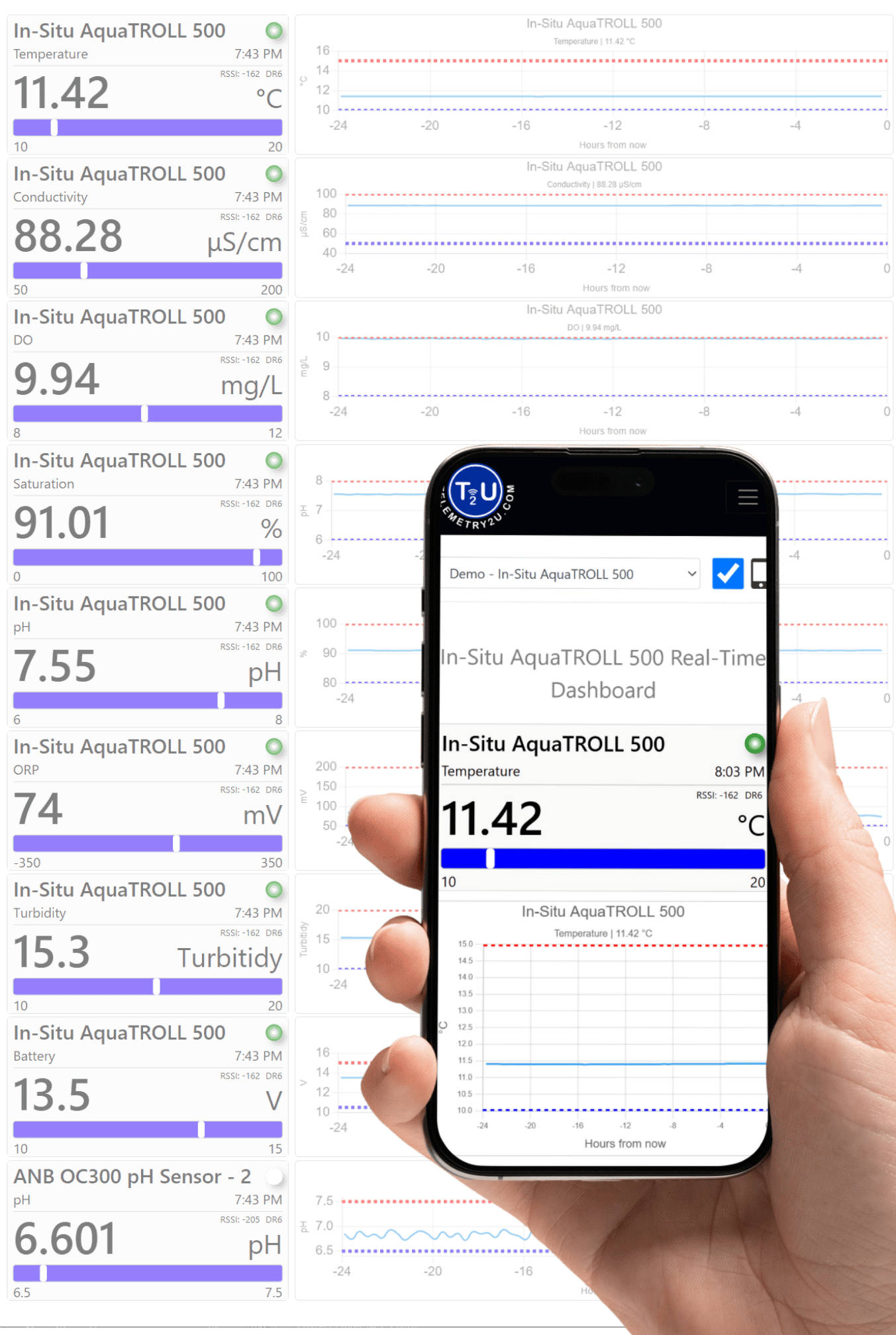
Example dashboard shown for demonstration purposes. Available measurements, widgets, update rates and controls depend on the connected sensor and monitoring configuration.
Related Aquaculture Water Quality Monitoring Resources
Explore the connectivity, sensor integration and platform resources behind a complete remote water quality monitoring deployment.
Connectivity and Interface Hardware
Compare networks and review the interfaces used to connect RS-485, Modbus and SDI-12 sensors.

Water and Marine Sensor Integrations
Explore proven integrations for aquaculture, water quality and oceanographic sensors using LoRaWAN, NB-IoT and LTE-M.
Dashboards, Alerts and Data
Explore the platform tools used to visualise readings, notify operators and review historical information.
Aquaculture Water Quality Monitoring FAQ
Common questions about sensor compatibility, wireless connectivity, power and multi-site aquaculture monitoring.
Aquaculture water quality monitoring is the continuous or scheduled measurement of conditions that affect aquatic stock, including dissolved oxygen, temperature, pH, conductivity, salinity, turbidity and other supported parameters. Remote monitoring sends these readings to a cloud platform for live viewing, historical analysis and alerting.
The available measurements depend on the connected sensor. Common aquaculture parameters include dissolved oxygen, water temperature, pH, ORP, conductivity, salinity and turbidity. Compatible instruments may also provide pressure, water level, ammonium, ammonia, nitrate, chlorophyll and blue-green algae measurements.
Often, yes. A documented RS-485 interface and Modbus RTU register map allow Telemetry2U to assess the sensor, power requirements, polling method and decoder needed for integration. Compatibility must be confirmed for the specific sensor and configuration.
Yes, compatible SDI-12 sensors can be connected through an SDI-12 interface available in LoRaWAN, NB-IoT and LTE-M variants. The sensor command set, measurement response and power requirements must be reviewed before deployment.
An Aqua TROLL 600 can be integrated when the selected output, power arrangement and measurement configuration are confirmed. Telemetry2U can configure the wireless interface, polling rules, payload decoder and dashboard for the required parameters.
The best network depends on the site. LoRaWAN is often suitable for many sensors around one farm or facility. NB-IoT can suit fixed remote sensors where carrier coverage is available. LTE-M can suit direct cellular deployments that need more frequent communication or broader mobility support. Coverage and power requirements should be checked before selection.
Not always. Low-power sensors may operate with battery-powered or compact solar wireless nodes. Sensors with higher or continuous power requirements can use a larger solar interface kit or a suitable local DC supply.
Yes. Telemetry2U can organise multiple sensors, ponds, tanks, farms and sites in one platform account, with dashboards, user permissions, alerts and reports configured for the deployment.
Bring Your Aquaculture Sensors Online
Send us the sensor model, interface documentation, required measurements, site location and preferred update rate. We can assess compatibility, power, wireless coverage and the practical path from the field instrument to your dashboard.