Oceanographic Instrument Integration for Remote Monitoring
Telemetry2U integrates compatible Sea-Bird Scientific and other oceanographic instruments with remote dashboards, alerts and historical records. RS-485, RS-232, analogue and other documented outputs can be connected through LoRaWAN, NB-IoT or LTE-M, with the interface, reporting interval and power system selected for the deployment.
Keep the Scientific Instrument. Add the Telemetry Layer.
Extend existing instruments into a remote monitoring system without replacing the measurement platform. Telemetry2U provides the field interface, wireless communications, data decoding and cloud presentation needed to make instrument data available away from the monitoring site.
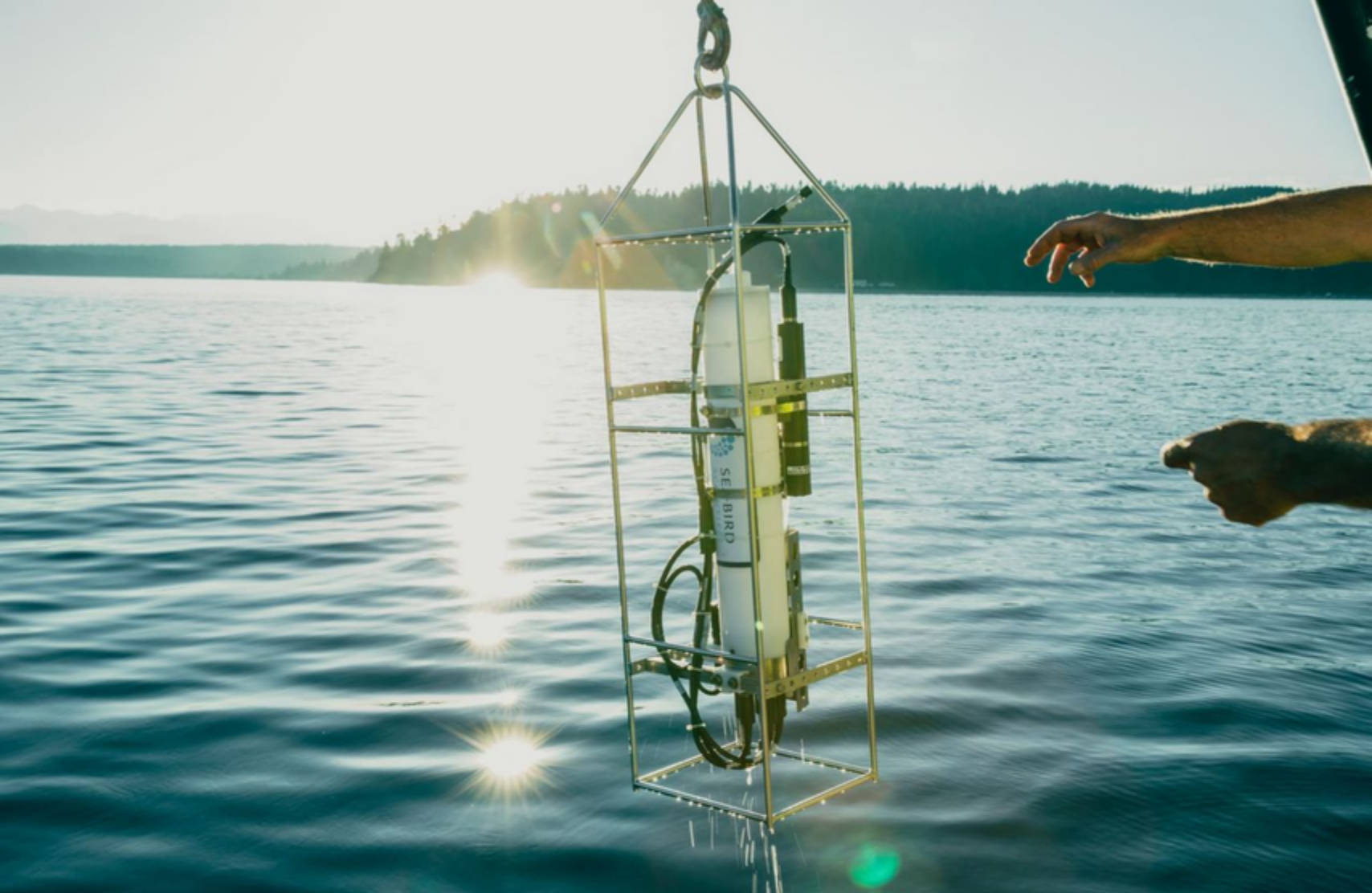
Connect Existing Oceanographic Instruments with a Standalone Telemetry Node
Telemetry2U can add remote monitoring to compatible Sea-Bird Scientific and other oceanographic instruments without replacing the instrument or placing an unnecessary load on its battery supply. A compact, independently powered telemetry node collects the required measurements and sends them to the Telemetry2U platform for live viewing, historical analysis and alerts.
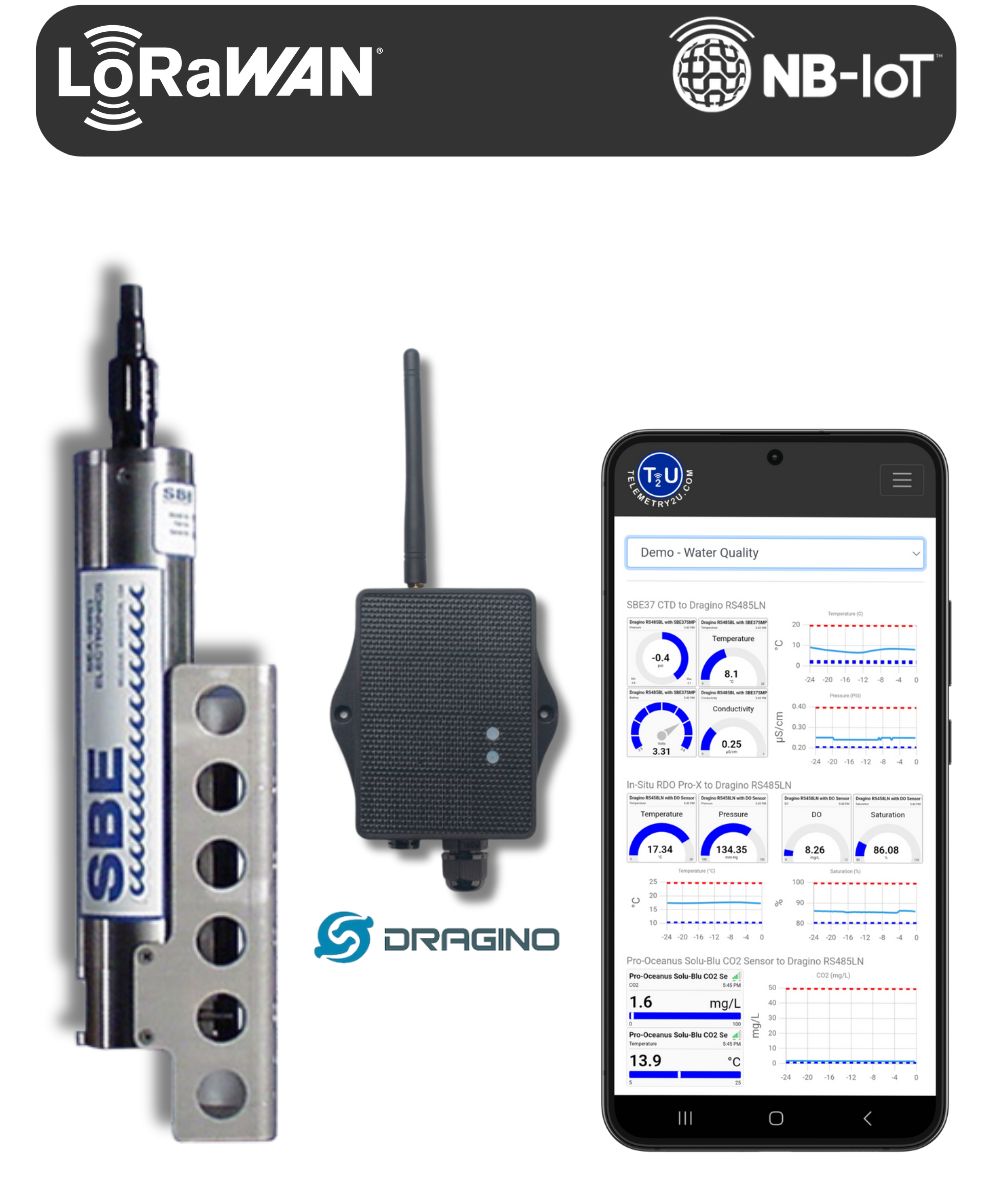
Pre-Configured Hardware for Straightforward Field Installation
Once compatibility has been confirmed, Telemetry2U can supply the telemetry hardware pre-programmed for the selected instrument. The instrument commands, polling schedule, data parsing, units, payload decoder and platform configuration can all be prepared before the equipment is delivered to site.
In many installations, the remaining field work is limited to mounting the node and antenna, connecting the prepared cable to the instrument, powering the instrument and confirming that measurements are arriving in the Telemetry2U dashboard.
- Independent battery or solar power: The telemetry node can use its own battery and solar supply, allowing it to operate without drawing continuous power from the oceanographic instrument in suitable deployments.
- Compact standalone installation: Small weather-resistant nodes can be mounted near the instrument on a buoy, pontoon, pile, coastal structure, monitoring frame or shoreline station without requiring a large control cabinet.
- Pre-programmed for the instrument: Telemetry2U configures the required commands, polling intervals, response handling and data conversion before supply.
- Support for multiple input types: Depending on the selected hardware, integrations can accept RS-485, RS-232, SDI-12, analogue voltage, 4–20 mA, pulse, digital and other documented instrument outputs.
- Decoded measurements rather than raw data: Instrument responses are converted into clearly named values, units and operating-status fields for dashboards, charts, reports and alerts.
- Retain the instrument's autonomy: Battery-powered loggers and scientific instruments can continue their normal measurement and internal recording functions while the separate telemetry node provides remote access.
Direct NB-IoT and LTE-M deployments require reliable cellular coverage, which generally makes them most practical for coastal, harbour, estuarine and near-shore monitoring locations. LoRaWAN can be used where a suitable gateway is within range. Offshore or more isolated deployments require a separate communications assessment.
Interfaces Used to Connect Oceanographic Instruments
Telemetry2U can integrate with a broad range of documented digital, analogue and specialist instrument outputs. The interface hardware is selected and pre-configured for the instrument, measurements and deployment.
Digital Instrument
Integration
Telemetry2U can communicate directly with instruments that provide documented serial or digital communications.
- RS-232: Point-to-point serial connections used by many scientific instruments.
- RS-485: Robust field communications suitable for longer cable runs.
- SDI-12: Low-power digital communications for environmental sensors.
- Supported protocols: Modbus RTU, readable ASCII and documented manufacturer-specific commands.
- Pre-configured operation: Polling, response timing and data decoding can be prepared before supply.

Analogue Instrument
Integration
Analogue instrument signals can be converted into clearly named engineering values for dashboards, charts, reports and alerts.
- Analogue voltage inputs: Interface hardware can be selected to suit most practical, documented voltage ranges.
- 4–20 mA inputs: Connect common industrial and environmental current-loop outputs.
- Engineering-unit scaling: Convert the electrical signal into the required measured value.
- Signal conditioning: Add isolation, protection or conversion where the installation requires it.
- Platform configuration: Apply units, decimal precision, charts and alert thresholds.
Specialist Instrument
Integration
Instruments with other documented outputs can often be connected using suitable interface, controller or conversion hardware.
- Pulse and frequency: Capture counters, flow signals, rotations and other timed outputs.
- Digital status inputs: Monitor switches, alarms, relays and dry-contact conditions.
- Surface controllers and modems: Collect data exposed by suitable topside marine equipment.
- Custom data formats: Decode documented manufacturer messages into usable measurements.
- Mixed-instrument systems: Combine different output types and manufacturers in one platform.
Supply the exact instrument model, output specification and required measurements. Telemetry2U can then select the interface, program the node and configure the resulting data.
How Oceanographic Instrument Data Reaches Telemetry2U
A reliable integration is more than attaching a radio. The instrument must be interrogated correctly, the useful data must be extracted, and the reporting method must fit the network and power budget.
From Instrument Output to a Usable Cloud Record

Assess
Confirm the model, interface, protocol, commands, power requirements, sample rate, required fields and deployment conditions.
Interface
Configure compatible hardware to power, poll, listen to or otherwise collect the required instrument response.
Transmit
Send the selected payload through LoRaWAN, NB-IoT or LTE-M at an interval that suits the data volume, power budget and network limits.

Decode and Monitor
Convert the payload into named measurements, store the data and present it through dashboards, charts, alerts, reports and API access.
Sea-Bird Scientific and Other Oceanographic Instrument Integrations
Sea-Bird Scientific is an important part of this page because many of its instruments expose serial data that can be logged or telemetered. It is not the only manufacturer Telemetry2U can work with. The integration is assessed from the instrument output and project requirements, not from the brand name alone.
Serial CTDs, Thermometers and Monitoring Systems
Exact compatibility depends on the selected model, options and operating mode.
SBE 37 MicroCAT
A proven conductivity and temperature integration example with RS-232 or RS-485 options and model-dependent pressure or oxygen measurements.
SBE 38 Digital Oceanographic Thermometer
A real-time temperature instrument with RS-232 or RS-485 output that is designed to feed a logger, computer or telemetry system.
SeaCAT and Profiling CTDs
Instruments such as the SBE 16plus V2 and SBE 19plus V2 provide serial communications and can support auxiliary sensor data in suitable configurations.
Shipboard and Modular Systems
Thermosalinographs, modular CTDs and surface controllers may also expose real-time data, but their architecture and data volume must be reviewed individually.
Water Quality, Carbon and Auxiliary Marine Sensors
Existing demonstrations show how mixed manufacturers can share one platform.
In-Situ Water Quality Sondes
Multiparameter sondes and dissolved oxygen instruments can feed dashboards for aquaculture, research and general water-quality monitoring.
Pro-Oceanus Carbon Sensors
Compatible dissolved CO2 instruments can be integrated where their output, power and reporting requirements suit the selected telemetry design.
YSI, nke and Satlantic Instruments
Compatible serial and analogue instruments from established marine and water-quality manufacturers can be assessed from their technical documentation.
Custom and Existing Field Equipment
Telemetry2U can also assess legacy instruments, third-party loggers and mixed sensor stations where a documented data output is available.
Oceanographic Instrument Supply and Integration Through Imbros
Telemetry2U works directly with Imbros on marine instrumentation projects. Imbros provides instrument selection, supply, technical support, servicing and calibration pathways, while Telemetry2U provides the communications interface, wireless telemetry, payload decoding and cloud-monitoring platform.

Instrument Selection, Supply and After-Sales Support
Imbros is a full-service marine and scientific instrument supplier with product sourcing, engineering support, servicing and calibration capabilities.
Telemetry2U Communications and Cloud Monitoring
- Instrument interface: Connect compatible serial, analogue and specialist outputs using an appropriate field node.
- Independent telemetry power: Use battery or compact solar-powered nodes where the instrument already has its own supply.
- Wireless transport: Select LoRaWAN, NB-IoT or LTE-M according to coverage, reporting interval and data volume.
- Payload decoding: Convert manufacturer responses into named measurements, units and device-status values.
- Remote access: Present current readings, historical charts, alerts, reports and API data through Telemetry2U.
Representative Oceanographic Instrument Manufacturers
Imbros supplies and supports a broad marine instrument range. Telemetry2U can assess compatible models from these and other manufacturers when documented communications and power information are available.






Brand inclusion indicates the type of instrumentation that may be assessed; it does not imply that every model or configuration is already supported.
LoRaWAN, NB-IoT and LTE-M for Oceanographic Telemetry
Network selection depends on the number of instruments, distance between sites, available infrastructure, coverage, data volume, reporting interval, latency and power budget. LPWAN technologies work best when the transmitted payload is designed around those constraints.
NB-IoT for Reliable Fixed Remote Stations
NB-IoT provides direct cellular connectivity without a local gateway and can suit static, low-data monitoring stations where compatible network coverage is available.
- Useful for isolated fixed sites and widely separated instruments
- No local LoRaWAN gateway infrastructure required
- Well suited to compact periodic payloads rather than continuous streams
- Coverage and carrier support must be checked at the deployment location
LoRaWAN for Multi-Instrument Sites
LoRaWAN is effective where several instruments or environmental sensors can share a gateway around a harbour, research facility, aquaculture lease, coastal station or other defined monitoring area.
- One gateway can support many low-data devices within its usable coverage
- Private or managed network options can reduce reliance on public cellular links
- Low power consumption supports battery and solar interface designs
- Payload size and duty-cycle limits must shape the reporting strategy

LTE-M for More Frequent or Mobile Data
LTE-M offers higher bandwidth and lower latency than the other LPWAN options, making it useful when the project needs more frequent transfers, remote updates or mobility.
- Direct cellular connection without a local gateway
- Better suited to larger or more frequent data transfers
- Can support moving platforms where the device and coverage permit
- Higher power consumption must be included in the energy budget
Match the Reporting Strategy to the Science
A high-frequency instrument does not necessarily need to transmit every raw sample. The design may retain high-resolution data locally while sending selected values, summaries, alarms or health information to Telemetry2U. The final approach should preserve the data needed by the project without exceeding network or power limits.
Independent Solar Telemetry for Battery-Powered Oceanographic Instruments
Many oceanographic instruments are designed to operate from their own internal batteries for extended deployments. In suitable integrations, the Telemetry2U interface node can use its own compact battery or solar supply, so the radio and cloud connection do not consume the instrument power reserved for scientific measurements.
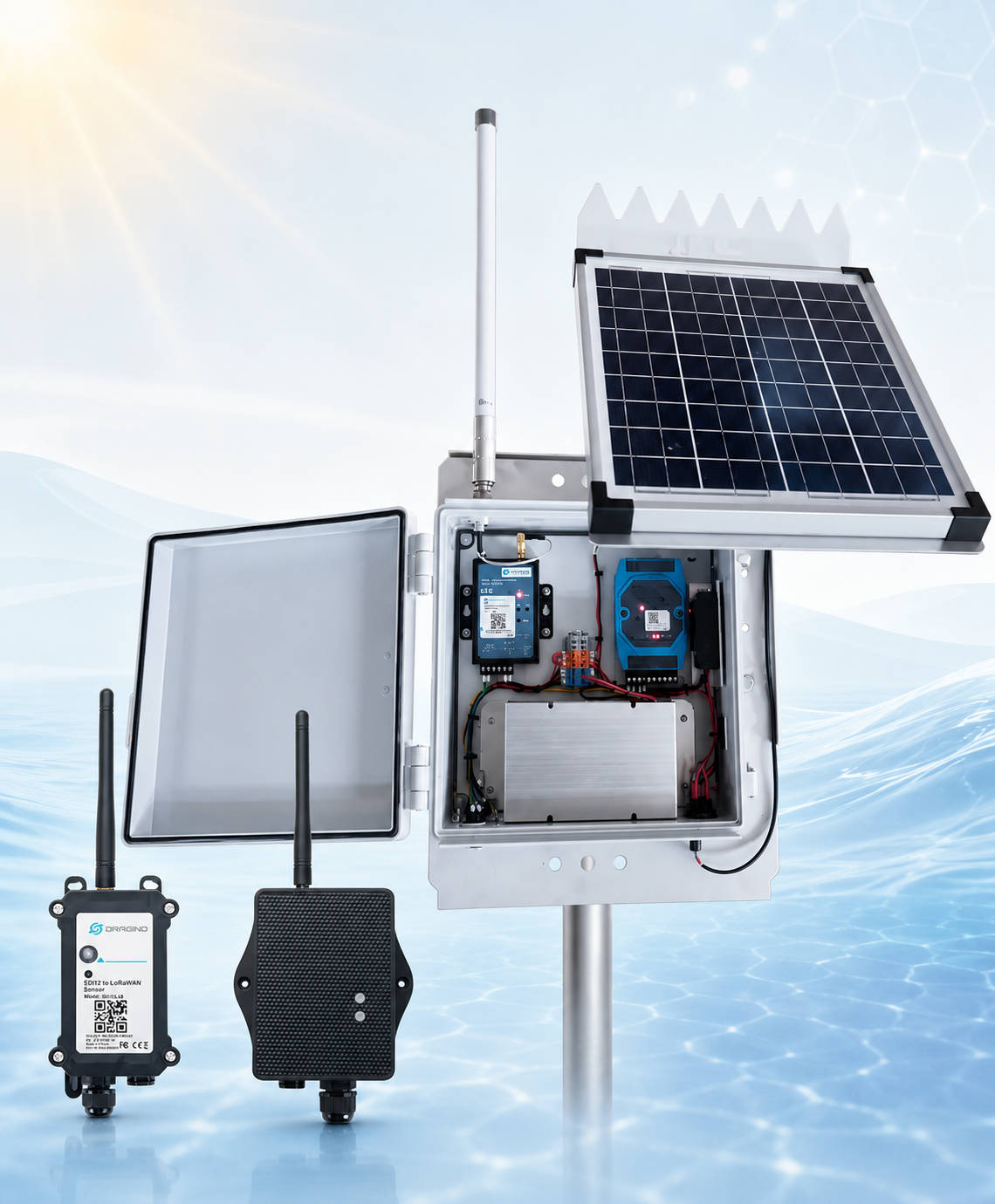
Illustrative examples of compact and higher-capacity solar telemetry arrangements.
Keep the telemetry power separate from the instrument battery
This approach is particularly useful for self-contained Sea-Bird Scientific and other instruments whose internal battery capacity already determines the planned deployment duration. A compact interface can wake at the required interval, retrieve the selected serial values, transmit them and return to a low-power state.
- Independent power: The telemetry node can use its own battery or solar-charged battery rather than drawing radio power from the oceanographic instrument.
- Compact solar nodes: Dragino LS-series interface nodes combine a weatherproof enclosure, rechargeable battery and small solar panel in one field package.
- Buoy and structure mounting: The small above-water package can be mounted on a buoy, pontoon, pile or instrument frame where the solar panel and antenna have suitable exposure.
- Short scheduled polls: The node can retrieve only the required values at a practical interval instead of keeping the instrument communications active continuously.
- Reduced integration load: Separating the power systems avoids redesigning the instrument supply solely to operate the wireless communications hardware.
- Higher-power exceptions: Instruments with pumps, heated elements, long warm-up periods or externally powered auxiliary sensors may still require a larger solar enclosure or site supply.
- Marine installation details: Cable glands, corrosion control, strain relief, antenna placement and service access remain part of the deployment design.
Telemetry2U can supply and configure a standard battery or solar interface where the instrument output and power arrangement are suitable. Custom buoy mechanics, underwater cabling and higher-capacity power systems can be coordinated with Imbros or another specialist project partner.
See Oceanographic Instrument Data in the Telemetry2U Dashboard
One Dashboard for Mixed Oceanographic Measurements
The demonstration dashboard combines measurements from a Sea-Bird SBE 37, an In-Situ dissolved oxygen instrument and a Pro-Oceanus dissolved CO2 sensor. It shows how data from different manufacturers can be organised within one platform.
From Raw Instrument Responses to Named Data
Telemetry2U decoders convert the received payload into useful inputs with names, units, scaling and display rules. The resulting data can then be used across dashboards, charts, alerts, reports and API integrations.
- View current temperature, conductivity, pressure, oxygen, CO2 and other configured measurements.
- Examine historical trends and compare related parameters over selected time ranges.
- Apply alert thresholds to individual measurements and route notifications to selected users.
- Monitor battery, communications or interface status where those values are supplied.
- Export data or retrieve structured readings through the Telemetry2U API.
Oceanographic Instrument Dashboard
Live demonstration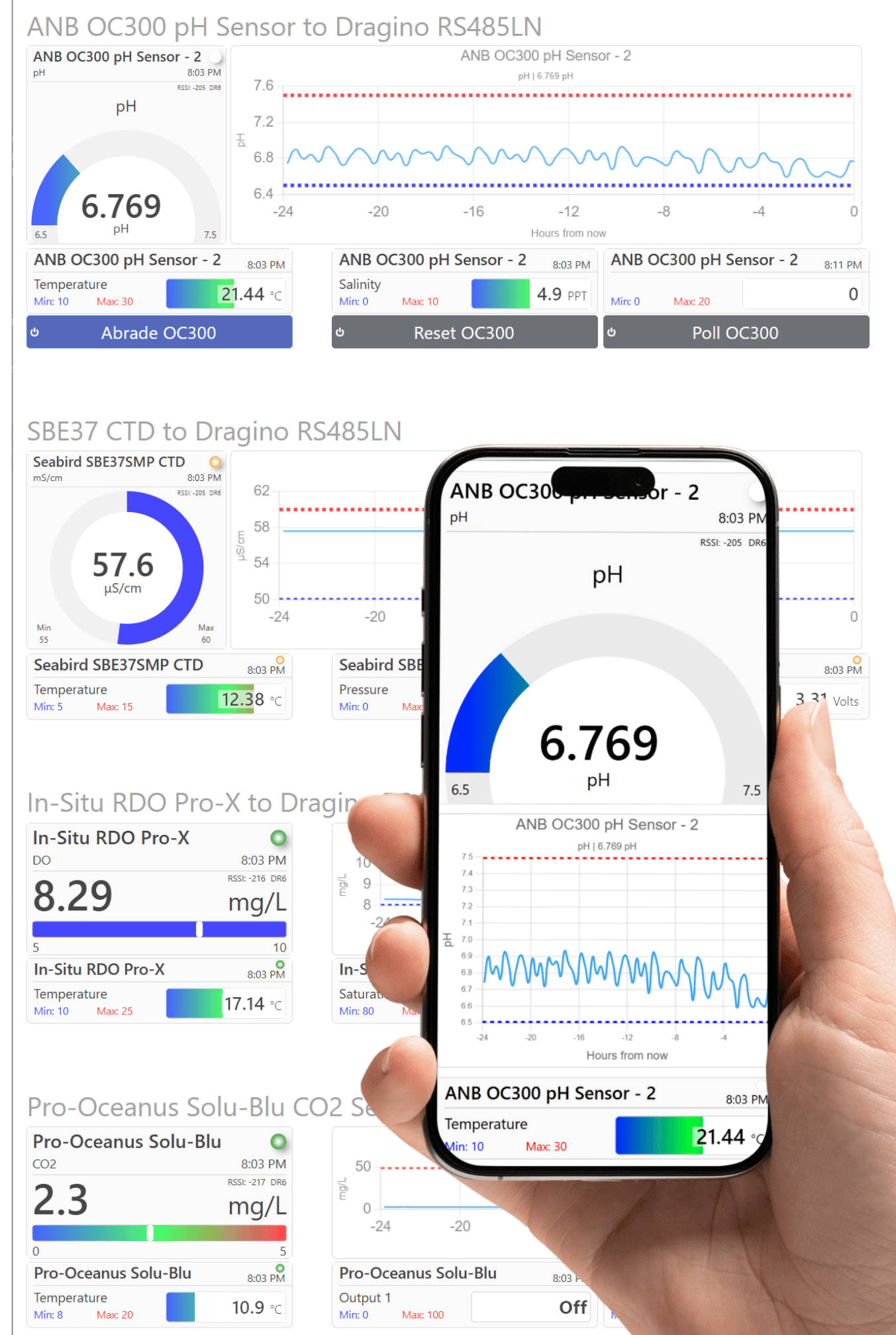
Example dashboard shown for demonstration purposes. Available measurements, sampling intervals, derived values and status information depend on the connected instruments and the final integration design.
Oceanographic Instrument Integration FAQs
These answers explain the practical limits and information needed before Telemetry2U can confirm an oceanographic instrument integration.
Related Oceanographic Integration Resources
Review instrument sources, platform features and related monitoring applications before planning the final integration.
Instruments and Interfaces
Review representative instruments and the hardware used to connect serial sensors.
Dashboards, Alerts and Data
Explore the platform capabilities used after the instrument data is decoded.
Related Monitoring Applications
Continue into application-specific water-quality and integration guidance.
Tell Us Which Oceanographic Instrument You Need to Connect
Send the model number, communications manual, available power, required measurements, sampling interval, installation location and preferred network. Telemetry2U can review the information and outline the likely interface, telemetry and platform requirements.